
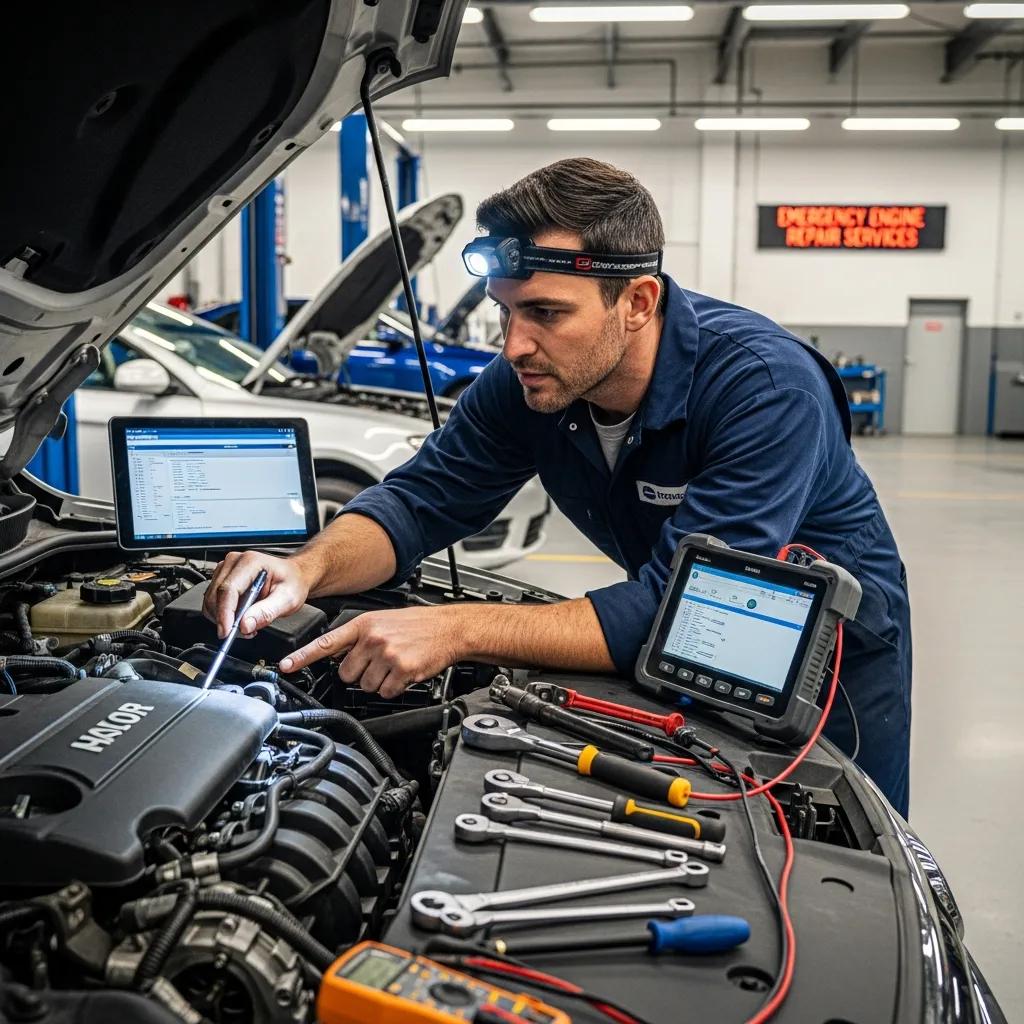
Emergency Engine Repair Services in Philadelphia: What You Need to Know for Fast, Reliable Car Engine Diagnostics and Repair
An emergency engine repair is any urgent intervention required when a vehicle’s engine shows signs of imminent failure, and fast, accurate diagnosis matters because delays increase safety risks and repair costs. This guide explains how to recognize acute engine problems in Philadelphia traffic, what immediate steps to take, how professional diagnostics work, which emergency repairs shops and mobile providers can perform, and what costs and roadside options to expect. Readers will learn symptom cues like overheating, knocking, and sudden stalls, step-by-step triage actions, the diagnostic tools technicians use, and when a tow or shop visit is the safest choice. After covering practical immediate steps and prevention, the article maps typical emergency services, cost ranges, and how to choose between mobile mechanics, towing, and shop-based rebuilding. Throughout, target phrases such as emergency engine repair services Philadelphia, emergency engine diagnostics Philadelphia, and 24/7 engine repair Philadelphia are integrated naturally to help local drivers find relevant, action-oriented information.
As a local resource for urgent engine work, 8 Cylinders Auto Repair can be a nearby option for drivers needing prompt diagnostics and repairs in Philadelphia. 8 Cylinders Auto Repair is a full-service automotive repair shop located at 3311 N 13th St, Philadelphia, PA 19140, offering professional engine repair, engine diagnostics and car engine repair performed in modern, fully equipped service bays by ASE-Certified Technicians. This mention is to show one example of the capabilities available locally; the rest of this guide focuses on practical signs, immediate actions, diagnostic workflows, repair options, cost drivers, and prevention strategies that apply across professional providers in Philadelphia.
Understanding typical emergency engine failures and how professionals diagnose them reduces downtime and limits further damage, which leads directly into the next section on the most common acute engine problems drivers face in Philadelphia and how to spot them. Recognizing these problems quickly lets drivers take the correct safety and triage actions before arriving at a repair shop or calling for mobile assistance.
What Are the Most Common Emergency Engine Problems in Philadelphia?
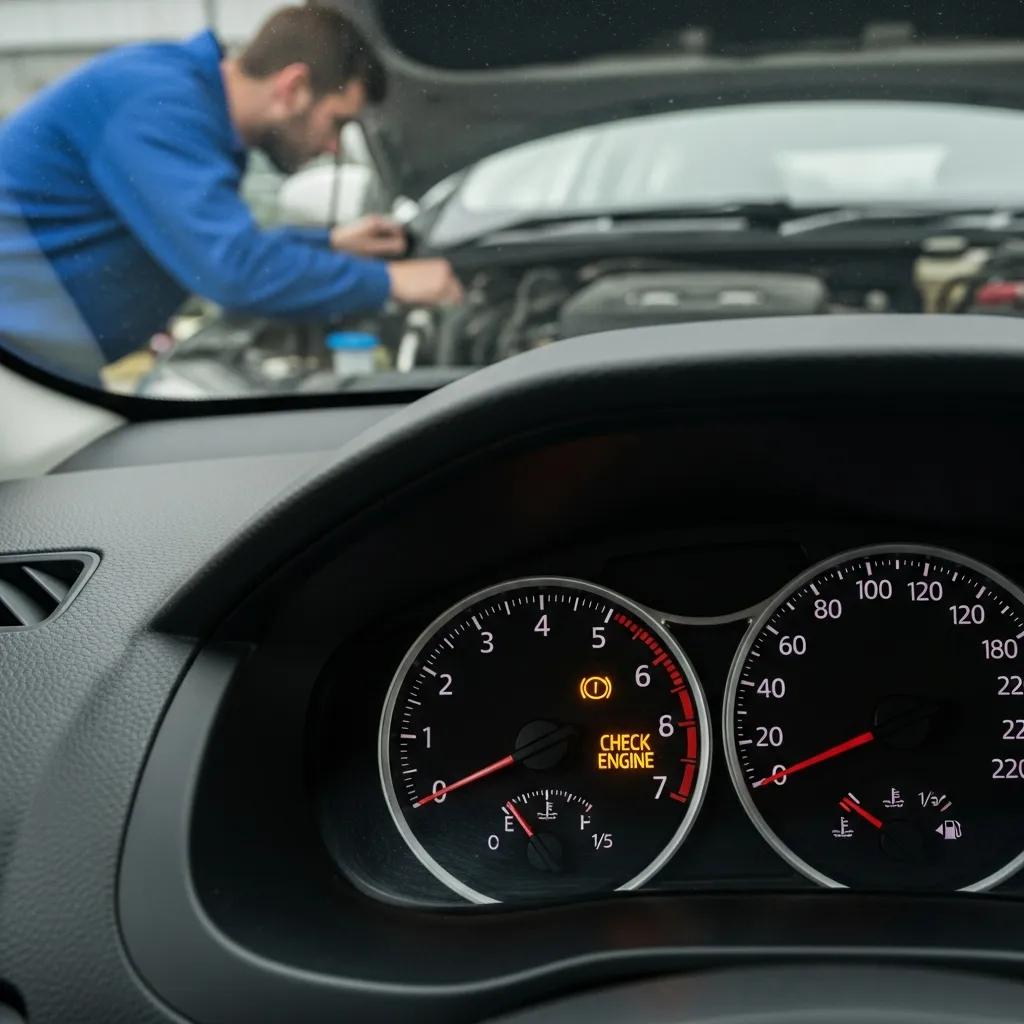
Acute engine problems in Philadelphia usually follow patterns driven by urban driving, vehicle age, and deferred maintenance; the most frequent emergencies are overheating, oil leaks, internal knocking, misfires with check engine lights, and sudden stalling. These failures originate from component breakdowns such as radiator or water pump failures, blown head gaskets, failed timing belts or chains, seized engine mounts, and fuel-system blockages — each mechanism leading to distinct symptoms and urgency levels. Rapid recognition and correct immediate steps can prevent catastrophic engine damage, lower repair bills, and improve roadside safety. The next subsections explain how to recognize early warning signs and outline immediate actions drivers should take to protect themselves and their vehicles.
Common emergency engine problems in Philadelphia include the following, localized by how traffic patterns and weather can exacerbate wear:
- Overheating: The cooling system fails, leading to high temperature readings and steam.
- Oil Leaks and Low Oil Pressure: Loss of lubrication causing bearing wear or seizure.
- Engine Knocking or Pinging: Internal detonation or bearing issues creating metallic noise.
- Misfires and Check Engine Light Faults: Electrical, ignition, or fuel delivery faults causing rough running.
- Timing Belt/Chain Failure: Sudden loss of valve timing that can cause catastrophic valve and piston damage.
These common issues reflect both meronyms (radiator, thermostat, head gasket) and hyponyms (timing belt replacement, cooling system repair) of broader auto repair categories, and knowing them helps drivers decide whether to attempt a quick check or call for help.
How to Recognize Signs Like Check Engine Light, Knocking, and Overheating
A check engine light indicates the vehicle’s onboard diagnostics detected a fault, but the light alone does not show severity; code reading with an OBD-II scanner converts that indicator into actionable information. Knocking or knocking-like metallic sounds often point to detonation, worn bearings, or timing issues — symptoms that require immediate inspection because continued driving can rapidly worsen internal damage. Overheating presents visually as a rising temperature gauge, steam or coolant smell, or sudden loss of heater function; these signs demand an immediate stop to avoid warped heads or a blown head gasket. If safe, drivers should note exact behaviors (RPM changes, coolant smell, dashboard codes) and relay this symptom history to the technician to speed accurate diagnostics and a fast repair plan.
These sensory clues connect directly to diagnostic steps used by professionals, which is why documenting symptoms before arrival can reduce diagnostic time and cost for urgent engine repairs.
What Immediate Actions Should You Take When Facing Engine Emergencies?
When engine symptoms appear, safety and minimizing damage are the priorities: pull over safely, shut off the engine, and assess visible signs without exposing yourself to traffic or hot components. If you see steam or smell coolant strongly, switch off the engine and wait for the system to cool before opening the hood; attempting to open a hot radiator cap can cause severe burns. For knocking or sudden loss of power, avoid restarting the engine and call for professional assistance or towing to prevent internal fragmentation. Keep clear notes of the check engine light behavior, any recent maintenance, and precise location details to give to roadside responders or a shop; this information shortens diagnostics and improves estimate accuracy when you hand the vehicle to technicians.
A clear set of triage steps helps both drivers and responding professionals: it reduces the risk of injury, prevents cascading mechanical failures, and speeds the path to a correct diagnosis and repair. The next major section explains how professional emergency engine diagnostics proceed once the vehicle reaches a qualified shop or mobile technician.
Fast, Reliable Emergency Engine Diagnostics & Repair in Philadelphia
Professional emergency engine diagnostics follow a structured workflow: intake and symptom documentation, electronic code scanning, visual and pressure tests, targeted component testing, and a written estimate before repairs begin. Diagnostic tools and methodical testing transform symptom descriptions into root-cause findings, reducing guesswork and unnecessary parts replacement. Accurate diagnostics deliver value by limiting repair scope to failed components and providing transparent time and cost expectations for the customer. The following H3 subsections detail the specific tools ASE-certified technicians use and typical diagnostic timeframes for urgent engine issues.
Shops use a combination of electronic and mechanical tests to isolate failures quickly, which informs a prioritized repair plan that balances safety, cost, and speed.
What Tools and Techniques Do ASE-Certified Technicians Use?
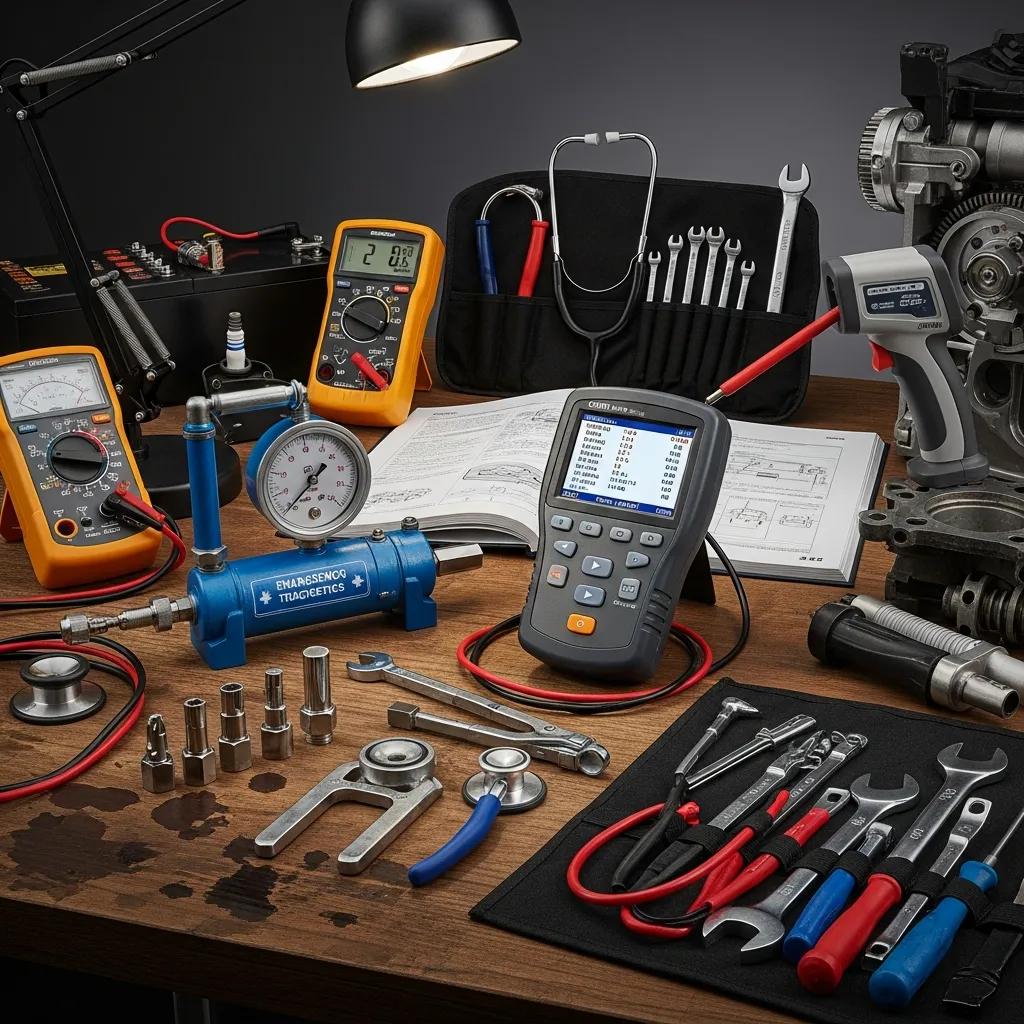
Technicians employ OBD-II scanners to read fault codes and freeze-frame data, compression and leak-down testers to assess cylinder integrity, infrared thermometers to detect hotspots, and smoke machines to locate vacuum or intake leaks. Visual inspection of hoses, belts, mounts, and fluid condition provides immediate clues, while fuel-pressure gauges and oscilloscope traces can reveal intermittent electrical or fuel delivery faults. ASE-Certified Technicians combine these tools with systematic troubleshooting — isolating sensors, testing live data, and confirming mechanical wear — so diagnoses reflect root causes rather than symptomatic fixes. Mentioning shop capabilities briefly: 8 Cylinders Auto Repair’s ASE-Certified Technicians and modern service bays illustrate the level of in-shop diagnostic capability drivers should expect locally.
Listing these tools as semantic triples clarifies relationships: ; ; . This structured approach improves diagnostic accuracy under emergency conditions.
How Fast Can Diagnostics Identify Urgent Engine Issues?
Basic electronic scans and visual inspections typically identify common urgent issues within 15–45 minutes, while deeper mechanical testing such as compression tests or leak-down exams may extend diagnostic time to 1–3 hours. Factors that lengthen diagnostics include intermittent faults that don’t reproduce at the shop, the need to disassemble components for inspection, or waiting for specialist tests such as coolant system pressure or oil analysis. Providing clear symptom history, recent maintenance records, and noting when the issue occurred (e.g., after highway driving or idling in traffic) can cut diagnostic time because technicians start with a more precise hypothesis. For urgent situations, shops prioritize safety-related failures and communicate expected timelines and next steps to the vehicle owner to avoid surprises.
Faster diagnostics generally depend on technician expertise, tool availability, and clear symptom reporting, which together determine how quickly an accurate repair estimate can be produced and authorized.
What Emergency Engine Repair Services Are Available in Philadelphia?
Emergency engine repair services in Philadelphia range from rapid fluid top-offs and cooling system patching to timing belt replacement, head gasket repair, and full engine rebuilding or replacement for catastrophic failures. Repair options include mobile interventions for simple fixes, shop-based repairs for heavier mechanical work, and engine rebuilding for severe internal damage; each service type maps to different urgency and repair timelines. A compact EAV-style comparison below helps drivers match the repair type to urgency and expected repair time. After the table, a short local provider note highlights that professional engine repair and rebuild services are available in established shops.
This inventory helps drivers prioritize which service is appropriate on-site versus requiring a tow to a fully equipped repair bay.
For drivers seeking a local example of shop-based capabilities, 8 Cylinders Auto Repair provides professional engine repair, rebuilding, and part replacement services in modern service bays handled by ASE-Certified Technicians, illustrating the kind of in-shop capability to expect for complex emergencies.
Which Repairs Address Engine Overheating, Oil Leaks, and Timing Belt Failures?
Cooling-system repairs begin with pressure-testing the system, replacing failed radiators, thermostats, or water pumps, and flushing old coolant to restore operating temperature stability; these repairs stop progressive overheating and protect the head gasket. Oil leaks are diagnosed by isolating the leak source — valve cover gaskets, oil pan seals, or front/rear main seals — and then replacing the failed gasket or seal and cleaning residual oil to prevent sensor fouling and fire risk. Timing belt or chain failures require immediate attention because a snapped timing belt or chain on interference engines can bend valves and damage pistons, often necessitating valve or engine rebuilds; replacing the belt or chain and related components (tensioners, pulleys, water pump) is the usual corrective action. Each repair restores component function and reduces the risk of repeat failure when correctly diagnosed.
Understanding repair scope helps drivers choose between on-site fixes and tow-to-shop solutions; the next subsection clarifies when rebuilds or replacements are necessary for critical failures.
Are Engine Rebuilding and Part Replacement Offered for Critical Failures?
Engine rebuilding or replacement becomes necessary when internal wear, seized components, or catastrophic timing failures render the block or head(s) beyond economical repair. A rebuild typically involves disassembly, measuring and machining the block, replacing worn pistons, rings, bearings, gaskets, and reconditioning the head — steps that restore internal tolerances and longevity. Replacement may be more cost-effective in some cases, using a remanufactured or used engine depending on availability and vehicle value; shops provide estimates comparing rebuild vs. replacement and outline warranty expectations. Rebuild timelines vary with parts availability and complexity, often requiring several days to weeks, and shops perform thorough testing after reassembly to ensure durability before returning the vehicle to the owner.
Clear communication about scope, timeline, and warranty options helps vehicle owners decide between rebuilding and replacing, and it minimizes the chance of repeat breakdown once the engine returns to service.
How Much Does Emergency Engine Repair Cost in Philadelphia?
Emergency engine repair costs vary widely based on the repair scope, parts required, labor rates, and urgency; minor emergency fixes such as coolant system repairs or simple gasket replacements often cost a few hundred dollars, while head gasket repairs or engine rebuilds can escalate into the thousands. Diagnostic fees, after-hours service premiums, and towing costs also influence the final bill. A clear breakdown of cost drivers helps vehicle owners anticipate likely ranges and ask the right questions when requesting an estimate. The H3 subsections below detail those cost factors and outline common financing or payment options to handle unexpected expenses.
Transparent pricing and a written estimate after diagnostics reduce the uncertainty that makes emergency repairs stressful and expensive.
What Factors Influence Emergency Repair Pricing?
Major cost factors include labor hours (driven by access difficulty and repair complexity), parts selection (OEM vs. aftermarket), diagnostic fees, and urgency — including after-hours or same-day service premiums. Vehicle make and model affect both parts pricing and labor time; high-performance or European models often require specialty parts and longer labor. Additional cost drivers include warranty coverage, whether the repair requires machining (e.g., head work), and towing or storage fees if the vehicle needs to be transported. Asking the shop for a line-item estimate and clarifying whether the price includes parts, labor, fluids, and testing helps consumers compare options and make informed choices.
Understanding cost drivers enables drivers to balance speed and price, which is essential when facing urgent repairs in an emergency.
Are Financing Options Available for Unexpected Engine Repairs?
Many shops can direct customers to third-party financing programs or point-of-sale loan providers that offer short-term payment plans for unexpected repairs, sometimes with quick credit decisions to avoid delaying urgent work. Consumers should ask about interest rates, origination fees, monthly payments, and whether financing affects warranty terms on parts or labor. Alternative options include credit cards, personal loans, or asking the shop for a phased repair plan that addresses the most critical items first; this approach can spread costs but requires clear communication about safety and drivability. Before committing, compare total repayment costs and prioritize repairs that restore safe operation over cosmetic or secondary items.
Knowing available payment pathways in advance helps vehicle owners authorize critical repairs without unnecessary delay, which in turn shortens time spent sidelined by an engine emergency.
What 24/7 Roadside and Mobile Engine Repair Assistance Options Exist in Philadelphia?
Philadelphia drivers facing engine emergencies can choose between mobile mechanics, towing to a shop, or calling roadside assistance; each option differs in immediacy, repair scope, and cost. Mobile mechanics provide on-site diagnostics and can complete many minor repairs such as code reading, fluid top-offs, battery and ignition fixes, and small part swaps. Towing to a fully equipped shop is appropriate for heavy mechanical work like timing belt failure, head gasket repairs, or engine rebuilding that require lifts and specialized tooling. Roadside assistance programs may coordinate towing and emergency services but often limit on-site repair scope; the subsections below explain mobile mechanic capabilities and decision rules for towing.
Choosing the appropriate response depends on the symptom severity, vehicle location, and the likely complexity of required repairs.
How Can Mobile Mechanics Provide Urgent Engine Diagnostics and Repairs?
Mobile mechanics typically perform OBD-II code reading, basic fuel and ignition troubleshooting, battery and starter services, fluid top-offs, hose clamp fixes, and simple part swaps that restore driveability on the spot. They are hyponyms of broader vehicle emergency services and excel at minimizing downtime when failures are straightforward and parts are available. Limitations include inability to perform heavy disassembly, machining, or complete engine rebuilds — tasks that require service bays and lifts. When engaging a mobile provider, verify technician certifications, warranty terms for parts and labor, and whether they can tow or coordinate with a local shop if on-site repairs are insufficient.
- Mobile repair pros can handle many urgent needs on-site:
Code reading and resets: Identify and clear non-critical codes.Fluid top-off and minor leak fixes: Restore safe operating levels.Ignition and fuel system swaps: Replace coils, plugs, or filters when accessible.
These capabilities make mobile mechanics a valuable option for drivers who need immediate, limited-scope fixes without towing.
When Should You Use Emergency Towing Services for Engine Breakdowns?
Tow a vehicle when it is unsafe to operate (heavy smoke, steam, severe oil loss), when symptoms suggest internal damage (metallic knocking, seized engine), or when the repair requires shop-only equipment such as lifts and machining tools. Tell the tow operator the specific symptoms, any fluids present, and your preferred shop drop-off to ensure safe handling and to prevent further damage during transport. In Philadelphia, choose tow services familiar with local shop locations and drop-off procedures to minimize time-in-transit and expedite repair start times. If unsure, err on the side of towing — transporting the vehicle to a qualified shop can prevent catastrophic damage that would otherwise require far costlier repairs.
Prioritizing safety and shop capability ensures the vehicle reaches the appropriate facility for reliable diagnosis and repair, which leads into preventative maintenance practices that reduce future emergencies.
How Can Preventative Maintenance Help Avoid Emergency Engine Repairs in Philadelphia?
Preventative maintenance reduces the risk of sudden engine failures by addressing common failure modes proactively: regular oil changes prevent lubrication breakdown, cooling system inspections avoid overheating, and fuel system cleaning reduces misfires and injector clogging. Routine checks of belts, hoses, mounts, and fluid levels catch wear before it becomes an emergency, and scheduled timing-belt replacement eliminates the catastrophic risk of belt failure. A short preventative checklist and maintenance intervals help Philadelphia drivers plan ahead and reduce the likelihood of roadside breakdowns; the H3 subsections detail oil and cooling maintenance and the role of fuel system cleaning.
Investing modest time or cost in prevention avoids the higher financial and safety costs of emergency engine repair, which completes the article’s guidance from symptoms to long-term avoidance.
Why Are Regular Oil Changes and Cooling System Checks Crucial?
Oil lubricates moving parts, carries heat away from bearings, and removes contaminants; degraded oil loses viscosity and additives, increasing friction and wear that can lead to overheating or seizure over time. Cooling system checks ensure the radiator, thermostat, hoses, belts, and water pump function together to keep operating temperature stable; neglect leads to overheating, warped heads, and head gasket failure. Recommended actions include following manufacturer intervals for oil service, periodic coolant flushes, and visual hose/belt checks before summer heat or winter salt exposure. Early replacement of worn components prevents emergencies and preserves engine longevity.
Routine maintenance thus directly prevents many emergency engine problems and reduces the chance of expensive, time-consuming repairs.
How Does Fuel System Cleaning Prevent Engine Emergencies?
Clogged fuel injectors or fuel filters reduce fuel flow, causing lean running, misfires, and stress on ignition and exhaust components; over time this can create conditions that trigger check engine lights and loss of power. Scheduled fuel system cleaning restores spray patterns and flow rates, improving combustion, lowering engine knock risk, and reducing load on catalysts and oxygen sensors. For vehicles with high-mileage or erratic idling, fuel-system services can be a cost-effective prevention step that improves reliability and fuel economy. Regular monitoring of fuel filters and injector performance as part of a maintenance plan reduces the chance that a clog will cause a sudden roadside failure.
Consistent preventative care minimizes emergency repair incidents and saves drivers time, money, and safety risk across Philadelphia’s driving conditions.
For immediate help with an engine emergency or to arrange a diagnostic appointment, consider contacting 8 Cylinders Auto Repair at +1 (445) 287-2000 or bring your vehicle to 3311 N 13th St, Philadelphia, PA 19140. If you’re stranded, prioritize safety, relay detailed symptom information, and request a diagnostic to obtain a transparent written estimate before authorizing repairs.