
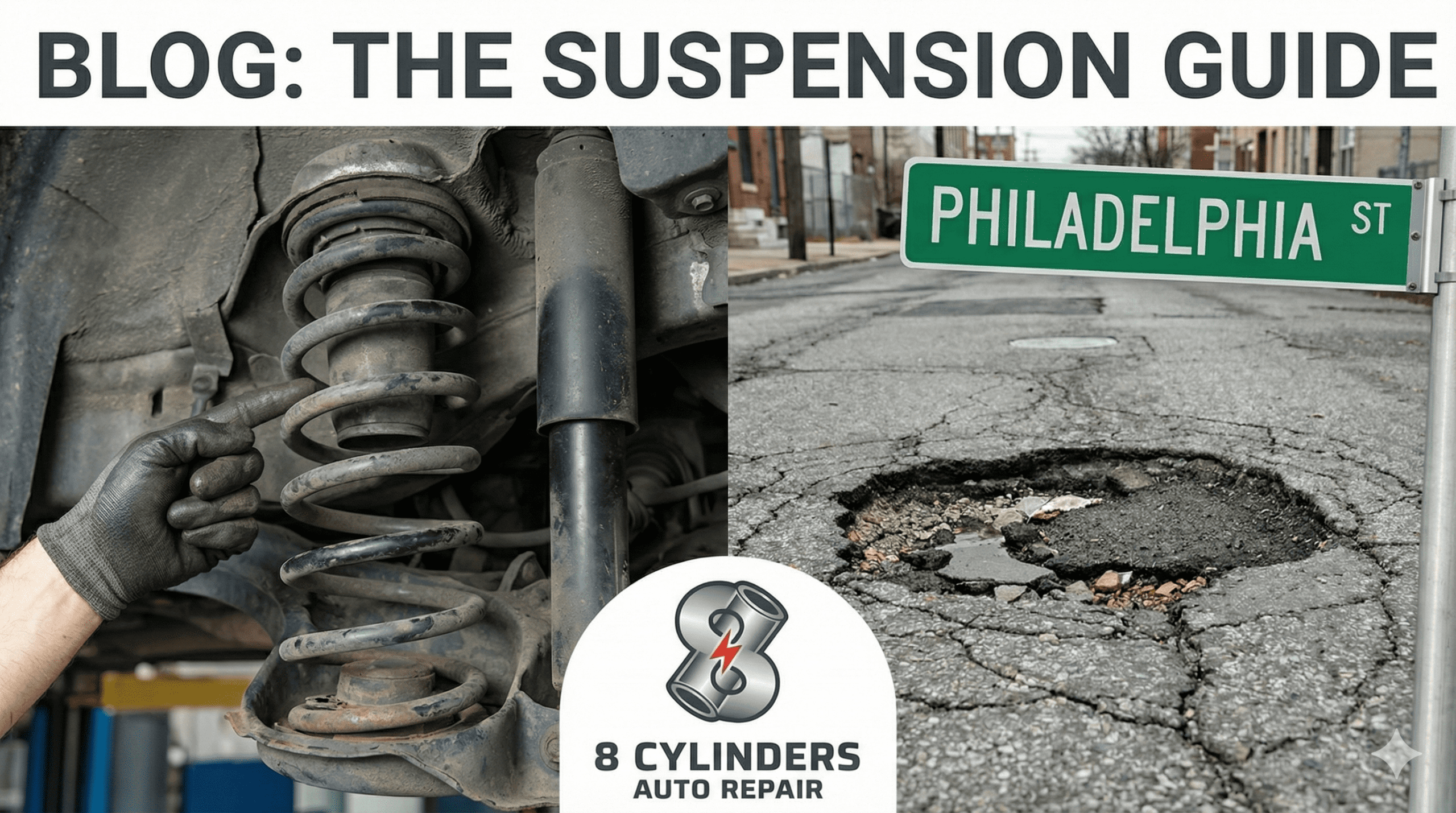
The Reality of Philly Roads
If you live in Philadelphia, you know that driving here is a unique experience. From the cobblestones of Old City to the eternal construction on I-76 and the pothole-ridden stretches of local avenues, your vehicle goes through a daily endurance test. While most drivers diligently schedule their oil changes and tire rotations, there is one crucial system that often gets ignored until a major failure occurs: the suspension system.
At 8 Cylinders Auto Repair Philadelphia, we often see vehicles come in with severe damage that could have been prevented with earlier detection. Your car’s suspension is not just about comfort; it is a critical safety system that controls how your car handles, brakes, and turns.
In this comprehensive guide, we will break down everything you need to know about car suspension repair, how to identify issues before they become dangerous, and why maintaining this system is vital for surviving Philadelphia driving conditions.
What Exactly is the Suspension System?
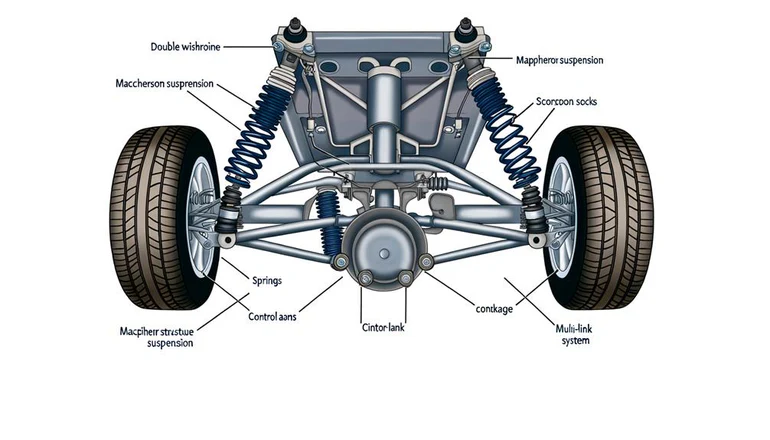
Before diving into repairs, it is helpful to understand what is actually going on underneath your car. The suspension system is a complex network of springs, shock absorbers, and linkages that connects your vehicle to its wheels and allows relative motion between the two.
Its primary jobs are:
- Ride Comfort: Isolating the vehicle body (and you) from road bumps and vibrations.
- Road Handling: Keeping the tires in contact with the road surface at all times to ensure traction.
Key Components of Your Suspension
When you come to 8 Cylinders Auto Repair for a diagnostic, we look at several specific parts:
- Springs (Coil or Leaf): These support the vehicle’s weight and absorb the energy from road impacts.
- Shock Absorbers and Struts: These dampen the motion of the springs. Without them, your car would bounce uncontrollably after every bump.
- Control Arms: These hinge the suspension to the frame, allowing the wheels to move up and down.
- Ball Joints: These act as pivot points, allowing the suspension to move while the wheels steer.
- Sway Bars: These prevent the car from rolling over during cornering.
When you search for automotive repair Philadelphia, you need a shop that understands how all these components interact. A failure in one (like a worn strut) can put immense pressure on another (like the ball joints), leading to a domino effect of expensive repairs.
5 Critical Signs You Need Car Suspension Repair
Suspension issues can be subtle at first. You might get used to the way your car handles, not realizing it has degraded over time. However, ignoring these signs can be dangerous. Here is what to look for:
1. The “Nose Dive” and “Rear Squat”
Pay attention to your car’s body language. When you hit the brakes firmly, does the front of your car lurch downward (nose dive)? Conversely, when you accelerate, does the rear dip down (squat)? This suggests your shocks or struts are worn out and can no longer stabilize the vehicle’s weight transfer. This is dangerous because it increases your stopping distance, making rear-end collisions more likely.
2. Drifting or Pulling During Turns
If you feel like you are fighting the steering wheel to keep the car in its lane, or if the car feels like it is “drifting” to the side when you aren’t turning, you have a problem. This is often a sign of a failing suspension system or poor wheel alignment. In auto repair Philly terms, this is a “red flag” that needs immediate attention to prevent accidents on narrow city streets.
3. The “Bounce Test” Failure
This is a simple DIY test you can do in your driveway. Park your car and push down hard on the front corner of the vehicle, then let go. It should bounce up and settle immediately. If it continues to bounce two or three times, your shock absorbers are shot. A car that bounces excessively is not keeping its tires firmly on the road, which ruins your traction.
4. Oily Struts
If you can look behind your wheel, check the struts (the shock absorbers). If they look greasy or oily, they are leaking fluid. A leaking strut is a dead strut. It cannot function properly and needs to be replaced immediately by a car suspension system repair specialist.
5. Uneven Tire Wear
Your tires tell the story of your suspension’s health. If you notice bald spots, or if the inside or outside edge of the tire is wearing down much faster than the rest, your suspension is not holding the wheel at the correct angle. This creates a friction point that eats away rubber. You will end up buying new tires constantly if you don’t fix the root suspension issue.
The “Philly Factor”: Why Local Drivers Suffer More Suspension Damage
Why do we emphasize suspension repair so much at our shop? Because Philadelphia is tough on cars.
Winter weather brings salt and moisture, which causes rust on the undercarriage. Rust can seize bolts and weaken control arms. Furthermore, the freeze-thaw cycle creates massive potholes.
Hitting a pothole at 30 MPH generates a tremendous amount of force. This can bend a control arm, blow out a strut seal, or even crack a spring. Unlike highway driving in flatter states, city driving in Philly involves constant turning, stopping, and navigating uneven pavement. This accelerates the wear and tear on your ball joints and tie rod ends.
When looking for auto repair shops in Philadelphia, you need mechanics who check for “city damage”—specifically, the kind of wear associated with stop-and-go traffic and poor road surfaces.
The Hidden Dangers of Delaying Repair
We understand that budget is always a concern. However, delaying suspension work is a false economy. Here is why:
1. It Damages Other Systems:
A vibrating, bouncing car shakes everything. We have seen cases where severe suspension vibration caused bolts to loosen in the engine bay, leading to the need for unnecessary car engine repair. It can also damage your exhaust system and ruin your wheel bearings.
2. Increased Stopping Distance:
Worn shocks can increase your stopping distance by up to 20% at highway speeds. In an emergency braking situation on I-95, those extra feet can be the difference between a close call and a serious accident.
3. Loss of Control:
If a ball joint or tie rod snaps while you are driving, your wheel can detach or turn sideways, causing an immediate loss of control. This is a catastrophic failure that we want to help you avoid at all costs.
Our Repair Process at 8 Cylinders Auto Repair
At 8 Cylinders Auto Repair Philadelphia, located at 3311 N 13th St, we pride ourselves on transparency. When you bring your vehicle in for a suspension check, here is what happens:
- The Test Drive: Our certified mechanics drive the vehicle to feel exactly what you are feeling—the vibrations, the pulling, and the noises.
- The Lift Inspection: We get the car in the air to physically inspect the bushings, joints, and shocks. We look for play (movement) in parts that should be solid.
- The Diagnosis: We explain exactly which parts have failed and which parts are worn but still functional. We prioritize safety first.
- The Repair: We use high-quality OEM or equivalent parts. Cheap suspension parts don’t last in Philly; we only use parts we trust.
- The Alignment: Car suspension repair almost always requires a wheel alignment afterward to ensure your tires track straight.
Conclusion: Don’t Let a Bumpy Ride Ruin Your Car
Your car’s suspension is the unsung hero of your daily commute. It protects the car frame, saves your tires, and keeps your family safe. If your ride has become uncomfortable, or if you hear clunking noises when going over bumps, don’t turn up the radio to ignore it.
We are proud to be a top choice among auto repair shops in Philadelphia. Whether you need a simple realignment or a full car suspension system repair, 8 Cylinders Auto Repair is here to help.
Contact Us Today or visit us on N 13th St to schedule your comprehensive suspension diagnostic. Let’s get your car driving smooth again.