
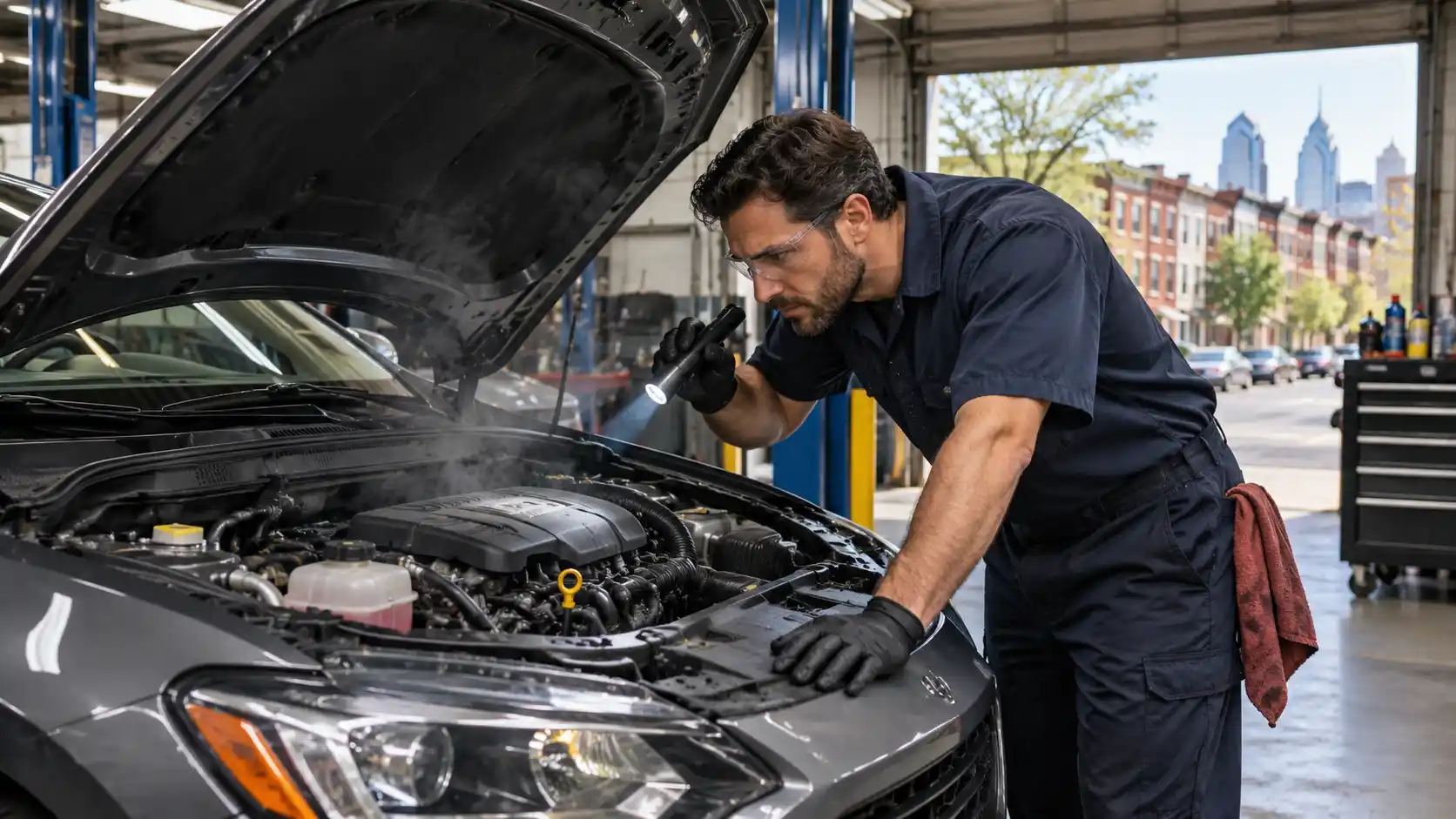
Signs of a failing engine can range from unusual knocking sounds and poor acceleration to repeated overheating, excessive oil consumption, and thick exhaust smoke. Some problems can be resolved with relatively simple repairs, while others indicate serious internal damage that may require an engine rebuild or complete replacement.
The difficulty for most drivers is determining which symptoms are serious.
A car that shakes at idle might have a faulty ignition coil. An engine that burns oil could have worn valve seals or damaged piston rings. A vehicle that suddenly stops running might have an electrical problem rather than a seized engine.
These situations can feel similar from behind the wheel, yet the repair costs and mechanical consequences are very different.
Before spending money on a replacement engine, it’s worth understanding how engine problems develop, which warning signs require immediate attention, and what tests can confirm whether the engine is repairable.
1. What Are the Most Common Signs of a Failing Engine?
An engine may develop mechanical, lubrication, cooling, or combustion problems before it stops working entirely.
Recognizing these symptoms early gives you a better chance of addressing the underlying problem before additional components become damaged.
| Warning sign | What it may indicate | Recommended action |
|---|---|---|
| Deep metallic knocking | Worn bearings or internal engine damage | Stop driving and arrange an inspection |
| Excessive blue exhaust smoke | Engine oil burning inside the cylinders | Check oil consumption and engine condition |
| Persistent thick white exhaust | Coolant entering combustion chambers | Investigate coolant loss and head gasket condition |
| Repeated overheating | Cooling system malfunction or internal damage | Stop the engine if overheating occurs |
| Rough idle and misfires | Ignition, fuel delivery, compression, or timing problems | Perform engine diagnostics |
| Low oil pressure warning | Lubrication system failure or internal wear | Shut off the engine safely |
| Sudden loss of power | Fuel, ignition, exhaust, transmission, or mechanical problems | Diagnose the affected system |
| Engine won’t crank | Battery, starter, electrical fault, or seized engine | Confirm the cause before replacing the engine |
The important point is that a symptom is not the same as a confirmed diagnosis.
A mechanic must determine why the symptom occurs before deciding which repair is appropriate.
For drivers experiencing persistent problems, professional engine repair in Philadelphia can help identify whether the issue involves a repairable component or serious internal damage.
2. Engine Knocking, Ticking, and Grinding: Which Noises Are Serious?
Every engine makes some noise during normal operation. Fuel injectors click, valves operate, and belts and pulleys rotate.
What deserves attention is a new sound, particularly when it becomes louder, changes with engine speed, or appears alongside a warning light.
Deep knocking from the lower engine
A heavy metallic knock can indicate excessive clearance between moving internal components.
Connecting rods attach the pistons to the crankshaft through bearings. These bearings depend on proper oil pressure and lubrication to prevent damaging metal contact.
When a bearing wears excessively or loses lubrication, movement between components can produce a rhythmic knocking sound.
Potential causes include worn connecting rod bearings, crankshaft damage, or oil starvation.
A serious bearing failure may contaminate the lubrication system with metal debris.
If the knock is severe, continuing to drive can turn an already expensive repair into extensive internal damage.
However, some noises described as knocking actually come from abnormal combustion rather than damaged bearings.
The sound must be identified before replacement is considered.
Ticking from the upper engine
Ticking sounds may originate from hydraulic lifters, valve train components, or timing system parts.
Some engines also produce normal fuel injector ticking.
A new, persistent ticking sound that worsens with temperature or engine speed should be investigated, particularly if the oil level or pressure is abnormal.
Depending on the cause, repairs may involve individual valve train components rather than the complete engine.
Grinding or rattling noises
Grinding during starting can originate from a starter motor or flywheel.
Rattling might come from loose exhaust components, pulleys, heat shields, or timing mechanisms.
These problems can create alarming sounds without necessarily indicating internal engine failure.
A mechanical inspection can distinguish between accessory problems and damaged internal parts.
When should you stop driving?
If the engine develops a loud, deep metallic knock, particularly with a low oil pressure warning, pull over safely and turn it off. Arrange towing rather than attempting to reach a repair shop under engine power.
3. Excessive Exhaust Smoke Can Reveal Internal Engine Problems
Exhaust color and timing can help narrow down potential engine problems.
However, smoke alone cannot establish whether a complete engine replacement is necessary.
Blue smoke usually indicates burning oil
Blue or blue-gray smoke often means engine oil is entering the combustion chambers.
Potential causes include worn piston rings, damaged cylinder walls, faulty valve stem seals, or turbocharger problems.
The conditions under which smoke appears can provide additional clues.
Smoke shortly after startup may suggest valve stem seal problems. Smoke that becomes more noticeable during acceleration or sustained engine load may raise suspicion about piston ring or cylinder wear.
Neither pattern provides a definitive diagnosis.
A mechanic may inspect the spark plugs, evaluate oil consumption, and perform cylinder compression testing.
If the problem involves a serviceable valve seal, a smaller repair may be sufficient. Severe cylinder wall damage can make rebuilding or replacing the engine more appropriate.
Persistent white smoke may indicate coolant entering the engine
White vapor on a cold morning is usually condensation.
Persistent thick white exhaust after the engine warms up is more concerning, especially when coolant levels repeatedly drop.
A failed head gasket can allow coolant to enter the combustion chamber.
Other possibilities include a cracked cylinder head or engine block.
Additional symptoms may include overheating, rough running, coolant contamination, or pressure building abnormally in the cooling system.
A failed head gasket can sometimes be repaired without replacing the entire engine.
Professional head gasket repair in Philadelphia may be appropriate when the surrounding components remain serviceable.
Black smoke may indicate excessive fuel delivery
Black exhaust smoke from a gasoline engine commonly indicates a rich air and fuel mixture.
Possible causes include leaking fuel injectors, incorrect sensor information, or an air intake restriction.
These problems may affect performance and fuel economy, but they do not necessarily indicate serious internal damage.
A properly diagnosed fuel injection repair can sometimes resolve the underlying issue without major engine work.
4. Repeated Engine Overheating and the Risk of Permanent Damage
An overheating engine needs prompt attention because excessive temperatures can damage components that depend on controlled operating conditions.
Cylinder heads, pistons, bearings, engine oil, and sealing surfaces can all be affected by extreme heat.
Why an engine overheats
Many overheating problems start outside the engine’s internal rotating assembly.
Potential causes include a stuck thermostat, leaking radiator, failed cooling fan, malfunctioning water pump, or coolant circulation problem.
For example, a vehicle may begin overheating in traffic because the radiator fan is not operating.
If the driver stops before serious damage occurs, fixing the fan system may resolve the problem.
A proper cooling system repair can address these faults without replacing the engine.
What happens when overheating continues?
Imagine someone notices their temperature gauge approaching the red zone but continues driving because the vehicle still moves normally.
As temperatures rise, the cylinder head may expand unevenly.
The head gasket can lose its seal, allowing coolant or combustion gases to pass between areas that should remain separated.
Continued overheating may distort components, degrade lubrication, or cause serious internal mechanical damage.
A relatively inexpensive cooling system fault can eventually lead to cylinder head repair or an engine replacement.
Does overheating automatically mean the engine is ruined?
No.
The severity of overheating, how long the engine operated at an excessive temperature, and its mechanical condition determine the likely consequences.
A vehicle that overheated briefly and was shut down promptly may have no lasting internal damage.
An engine that repeatedly overheats, loses coolant, misfires, and develops low compression deserves more extensive inspection.
If the temperature warning indicates serious overheating, stop safely and shut the engine off. Never remove a hot pressurized coolant cap.
5. Rough Idling, Misfires, and Loss of Engine Power
A healthy engine produces relatively consistent power from its cylinders.
When one or more cylinders fail to contribute properly, the driver may experience shaking, hesitation, poor acceleration, or stalling.
These symptoms are often described as engine failure, but many come from repairable ignition or fuel system problems.
Faulty ignition components
Spark plugs ignite the air and fuel mixture inside gasoline engine cylinders.
Ignition coils provide the high voltage needed for spark plug operation.
When either component fails, combustion may become inconsistent.
A vehicle might shake at a stoplight, hesitate under acceleration, or trigger a check engine light.
Replacing a defective component after proper testing can restore normal performance.
An auto tune-up service may address certain maintenance-related performance problems, although persistent misfires require specific diagnosis rather than routine parts replacement.
Fuel delivery problems
A clogged or defective injector may prevent a cylinder from receiving the correct amount of fuel.
Fuel pressure problems can also affect multiple cylinders.
These issues can produce hesitation, rough running, or reduced power.
They should be investigated before concluding that the engine has internal mechanical damage.
Loss of compression
More serious problems arise when a cylinder cannot maintain sufficient compression.
Potential causes include damaged valves, worn piston rings, failed head gaskets, or cylinder wall damage.
A mechanic may use an engine compression test to measure how effectively the cylinders build pressure.
If one cylinder has substantially lower compression than expected, further testing is necessary.
A compression problem may require cylinder head work, internal engine repair, or replacement, depending on its cause.
What does a flashing check engine light mean?
A flashing check engine light frequently indicates a serious misfire that may damage the catalytic converter.
Reduce engine load and stop driving safely, particularly if the vehicle is shaking severely or losing power.
Professional engine light diagnostics can identify fault codes and guide the next tests.
A trouble code alone does not prove which component has failed.
6. Low Oil Pressure and Excessive Oil Consumption
Engine oil separates moving metal surfaces, reduces friction, helps manage internal heat, and protects critical components from accelerated wear.
When the lubrication system cannot maintain adequate oil pressure, engine damage can occur rapidly.
Low oil pressure warnings
A red oil pressure warning is different from a routine oil change reminder.
The warning may indicate insufficient pressure caused by low oil, an oil pump malfunction, excessive bearing clearance, an obstructed oil pickup, or a sensor fault.
Because the consequences of genuine low oil pressure can be severe, the warning should never be dismissed without testing.
If it appears while driving, pull over safely and turn off the engine.
A mechanic can measure actual oil pressure using appropriate equipment to determine whether the warning reflects a mechanical problem.
Why is the engine consuming oil?
Oil consumption can result from external leaks or internal oil burning.
A worn gasket may allow oil to escape onto the exterior of the engine.
Worn piston rings or valve seals may allow oil to enter the combustion chambers.
The difference matters because an external oil leak may be repaired without opening the engine, while extensive cylinder wear can require major internal work.
If the vehicle repeatedly needs additional oil, document the amount added and the distance traveled.
This gives the mechanic useful information when assessing the condition.
Metal particles in engine oil
Metallic debris discovered during an oil change can indicate internal component wear or damage.
The amount and composition of debris matter.
A mechanic may inspect the oil filter, examine the particles, and perform additional mechanical tests.
Significant bearing damage accompanied by metal contamination is a more serious finding than an isolated oil leak.
Following the manufacturer’s maintenance schedule and using appropriate oil change services helps maintain lubrication and provides opportunities to identify developing problems.
7. Is It Really Engine Failure or Could It Be the Transmission?
Not every vehicle that struggles to accelerate or refuses to move has a failing engine.
Engine and transmission problems can produce overlapping symptoms, especially when the driver experiences hesitation, unusual noises, or loss of power.
The engine generates power. The transmission transfers that power through the drivetrain at appropriate gear ratios.
A problem in either system can affect how the vehicle drives.
Signs that suggest an engine problem
Engine-related symptoms often include rough idling, repeated combustion misfires, abnormal exhaust smoke, overheating, low oil pressure, or knocking originating inside the engine.
For example, a vehicle that shakes while parked with the engine running may have a combustion or engine mounting problem.
If testing reveals low cylinder compression, attention shifts toward internal engine components.
Signs that suggest a transmission problem
Transmission faults may cause delayed engagement when selecting Drive or Reverse, slipping under acceleration, harsh gear changes, or a failure to transfer power to the wheels.
A driver may notice that engine RPM increases without a corresponding increase in vehicle speed.
This can happen when a transmission slips, although other drivetrain problems can sometimes produce similar symptoms.
If the symptoms suggest a drivetrain fault, a technician should inspect the transmission before recommending engine work.
In cases involving severe transmission damage, transmission replacement in Philadelphia may be considered instead.
What if the engine won’t start?
A no-start condition can have many causes unrelated to internal engine failure.
A failing battery, starter motor, alternator-related charging problem, ignition fault, or fuel system problem may prevent a vehicle from starting.
A seized engine is one possibility, but it should not be assumed simply because the starter cannot crank the engine.
An electrical system inspection or alternator replacement assessment may be appropriate when charging-related symptoms are present.
This is why a proper diagnosis through an experienced auto repair shop in Philadelphia matters before approving expensive repairs.
8. How Mechanics Determine Whether an Engine Needs Replacement
Engine replacement is a major repair. It should be recommended only after diagnostic evidence supports the decision.
A technician generally starts with the reported symptoms and then chooses tests based on the suspected problem.
Computer diagnostics
Modern vehicles monitor engine operating conditions using sensors and control modules.
A diagnostic scan may identify stored trouble codes related to misfires, air and fuel mixture, sensor operation, or other systems.
However, computer diagnostics have limitations.
A code identifying a misfire in cylinder three does not reveal whether the cause is an ignition coil, fuel injector, mechanical valve problem, or compression loss.
The next diagnostic step must investigate the actual cause.
Compression testing
An engine compression test measures how much pressure a cylinder builds during cranking.
Low compression may suggest damaged valves, worn piston rings, head gasket problems, or other mechanical conditions.
Technicians compare readings with the manufacturer’s specifications and other cylinders.
One cylinder showing poor compression does not automatically mean the entire engine needs replacement.
A localized valve problem may be repairable.
Cylinder leak-down testing
An engine leak-down test helps determine where a cylinder is losing pressure.
Compressed air is introduced into a cylinder while its valves are closed.
The technician then checks how much air escapes and where it travels.
Air escaping into the intake may indicate an intake valve sealing problem. Air escaping through the exhaust may suggest an exhaust valve issue. Leakage into the crankcase can indicate worn rings or cylinder damage.
Air bubbles in the cooling system may indicate a sealing problem involving the head gasket or surrounding components.
These observations help distinguish a repairable cylinder head problem from more extensive internal damage.
Head gasket testing
If a vehicle loses coolant, overheats, or produces persistent white exhaust, a technician may perform a cooling system pressure test or a head gasket chemical test.
A chemical combustion gas test can help detect combustion gases entering the cooling system.
No single test identifies every possible head gasket failure, so results must be considered alongside other evidence.
Inspecting the engine internally
When testing indicates severe mechanical damage, further inspection may be justified.
A mechanic may examine oil filter debris, inspect cylinders with a borescope, evaluate valve train components, or disassemble affected parts.
Evidence of severe bearing damage, broken pistons, damaged cylinder walls, or structural problems can support a replacement recommendation.
Before authorizing the work, request an explanation of the findings and a written estimate.
9. When Is Engine Replacement Actually Necessary?
Engine replacement becomes a practical option when the damage is too extensive for an economical repair, critical internal components are no longer serviceable, or a replacement assembly offers better value than rebuilding the existing engine.
Several conditions make this decision more likely.
A seized engine
An engine may seize when internal components lock together following lubrication failure, overheating, or a mechanical breakage.
A technician must first confirm that the engine itself cannot rotate.
A defective starter or locked accessory can sometimes create the appearance of a seized engine.
When internal seizure is confirmed, extensive repair or engine replacement may be necessary.
Severe connecting rod bearing damage
Connecting rod bearings operate between the rods and crankshaft.
When these bearings fail, they can damage crankshaft surfaces and introduce metal particles into the lubrication system.
Extensive bearing damage may require substantial rebuilding work.
The repair decision depends on the crankshaft, block, connecting rods, lubrication passages, and other internal components.
Cracked engine block
An engine block supports major internal components and contains passages for oil and coolant.
Cracks can compromise structural integrity or allow fluid leakage.
Some block defects can be repaired, but the location and severity determine whether repair is practical.
A severely damaged block is often a strong reason to consider replacing the engine.
Extensive cylinder or piston damage
Broken pistons, heavily scored cylinders, and other major internal failures can require machining, replacement parts, and substantial labor.
If multiple areas are damaged, repairing the existing engine may cost more than installing a suitable replacement.
Repeated major mechanical failures
A vehicle with persistent oil consumption, repeated overheating, significant compression loss, and previous internal repairs may require a broader evaluation.
Repairing one component might not address widespread wear elsewhere in the engine.
In these circumstances, professional engine replacement services in Philadelphia can help determine whether a replacement engine offers a more practical long-term solution.
Engine replacement should not be based on mileage or a single warning sign. The decision should reflect confirmed mechanical damage, the condition of the vehicle, and the total cost of available repairs.
10. Engine Repair vs. Rebuilding vs. Replacement: What Is the Better Choice?
The best option depends on the condition of the engine, the cost of labor and parts, and how long the owner plans to keep the vehicle.
| Option | When it makes sense | Main consideration |
|---|---|---|
| Engine repair | A specific component has failed and the rest of the engine remains serviceable | Usually less extensive than rebuilding |
| Engine rebuilding | Internal components are worn or damaged, but the engine can be restored | Requires machining, parts, and labor |
| Used engine replacement | A compatible used engine with acceptable history and warranty is available | Condition and prior maintenance may be uncertain |
| Remanufactured engine | A restored replacement assembly is preferred | Cost, supplier quality, and warranty vary |
| New engine replacement | A suitable new engine is available and financially justified | Often expensive or unavailable for older vehicles |
When engine repair makes more sense
Suppose a car begins overheating because its water pump fails.
The driver stops promptly, and testing confirms that the engine has not suffered internal damage.
Replacing the faulty water pump would address the cause without requiring a new engine.
The same principle applies to many sensor, ignition, cooling, and fuel system problems.
A professional engine inspection should identify whether the failure is isolated or part of a larger mechanical problem.
When rebuilding is worth considering
An engine rebuild involves disassembling the engine and restoring its internal condition through inspection, machining where necessary, and replacement of worn or damaged components.
Rebuilding may make sense when the block and other major components remain suitable for reuse.
However, labor and parts costs can make rebuilding expensive.
The original engine’s condition and the availability of compatible replacement assemblies should guide the decision.
Used vs. remanufactured engines
A used engine generally comes from another vehicle.
Its condition depends on its history, maintenance, inspection, and how it was stored.
A remanufactured engine is disassembled, inspected, and restored according to a defined process.
Warranty coverage varies significantly, so drivers should confirm whether parts and installation labor are included, as well as any conditions that could affect warranty eligibility.
How do you decide whether replacement is financially worthwhile?
Consider the complete vehicle, not just the engine.
A vehicle with a damaged engine but a healthy transmission, sound body, and properly functioning electrical system may be worth repairing.
Another vehicle with similar engine damage, transmission issues, serious corrosion, and expensive upcoming maintenance may not be.
Ask for estimates that include parts, installation, required fluids, programming, associated component repairs, and warranty terms.
Then compare the total cost with the expense of obtaining another reliable vehicle.
11. How to Reduce the Risk of Major Engine Damage
Not every mechanical failure is preventable, but regular maintenance and prompt diagnosis can reduce the chance that a manageable problem becomes severe.
Maintain the correct oil level and specification
Use the oil viscosity and specification recommended by the vehicle manufacturer.
Check oil levels as instructed in the owner’s manual, particularly when the engine has a history of oil consumption.
Do not assume that the absence of an oil warning light means the oil level is adequate.
Regular service and attention to leaks can help protect bearings, pistons, and other internal components.
Address cooling system problems early
Coolant leaks, failing fans, restricted radiators, and water pump problems can lead to overheating.
Pay attention to unexplained coolant loss, changes in engine temperature, or visible leaks.
A cooling system inspection may identify a repairable fault before the engine overheats seriously.
Follow timing belt and timing chain recommendations
The timing system coordinates crankshaft and camshaft operation.
If the timing system fails on certain engine designs, pistons and valves can collide, causing major internal damage.
Timing belts have manufacturer-specific replacement recommendations. Timing chains often have different service requirements, but they can still develop wear or tensioner problems.
Unusual timing system rattles or related fault codes deserve investigation.
Where appropriate, timing chain replacement may address an identified mechanical timing problem before more extensive damage occurs.
Investigate performance changes
A new vibration, repeated misfires, unexplained fuel consumption, or loss of power may indicate a developing fault.
Instead of repeatedly replacing parts without testing, have the affected system diagnosed.
Proper vehicle maintenance services and timely mechanical inspections can help identify concerns before they require more extensive work.
12. What Should You Do If Your Engine Shows Multiple Warning Signs?
If several serious symptoms occur together, the possibility of significant engine damage increases.
For example, a vehicle that experiences overheating, coolant loss, rough running, and low compression may have a serious sealing problem.
An engine that develops heavy metallic knocking, low measured oil pressure, and metal debris may have substantial internal bearing damage.
Neither situation should be diagnosed from symptoms alone, but both require prompt professional attention.
Know when to stop driving
If the engine overheats severely, displays a low oil pressure warning, develops loud internal knocking, or begins running dangerously poorly, pull over safely.
Shut it off and arrange a tow when serious engine damage is suspected.
Driving farther can make the problem worse.
Ask for documented diagnostic findings
Before approving replacement, request the results of the relevant tests.
Ask which component failed, what evidence supports that finding, and why a smaller repair is or is not recommended.
If major engine work is proposed, a written estimate and clear warranty information will make it easier to compare options.
Get professional engine diagnostics in Philadelphia
If you’re experiencing signs of a failing engine, 8 Cylinders Auto Repair provides auto repair, engine diagnostics, engine repair, and engine replacement services in Philadelphia.
The shop can evaluate the symptoms and help determine whether the vehicle needs a specific component repair or more extensive work.
8 Cylinders Auto Repair
3311 N 13th St, Philadelphia, PA 19140
Phone: (267) 667-1766
Explore Engine Replacement Services
The right next step is a diagnosis that explains the failure and provides enough information to make a repair decision with confidence.
Frequently Asked Questions
Can a failing engine still run?
Yes. An engine may continue operating despite worn bearings, excessive oil consumption, reduced compression, or other internal problems. The fact that it starts and runs does not necessarily mean it is mechanically healthy.
Does engine knocking always mean you need a replacement?
No. Engine knocking can result from different mechanical or combustion problems. Some are repairable without replacing the engine. Severe internal bearing damage, however, may require rebuilding or replacement.
Can low compression be repaired?
Sometimes. Low compression caused by a valve or head gasket problem may be repairable. Extensive piston ring or cylinder damage can require major internal work. Diagnostic testing is needed to identify the cause.
Is engine replacement better than rebuilding?
Neither option is universally better. Rebuilding may be suitable when the existing block and components can be restored economically. Replacement may make more sense when internal damage is extensive or a suitable replacement engine offers better value.
Can a bad transmission feel like engine failure?
Yes. Transmission slipping, delayed engagement, or failure to transfer power can resemble engine performance problems. The affected system should be diagnosed before an engine or transmission replacement is recommended.
Should I replace the engine in a high-mileage car?
Mileage is only one consideration. The vehicle’s mechanical condition, maintenance history, transmission, body condition, repair estimate, and cost of replacement transportation all matter.
Can a damaged head gasket cause complete engine failure?
A head gasket failure can lead to coolant loss, overheating, lubrication contamination, or other damage if the problem is severe or ignored. However, many head gasket failures can be repaired before the engine becomes uneconomical to restore.
What are the strongest signs that an engine needs replacement?
Confirmed severe internal bearing damage, an engine seizure caused by internal failure, extensive piston or cylinder damage, major block damage, or repair costs that exceed a practical replacement option are stronger indicators than symptoms alone.