
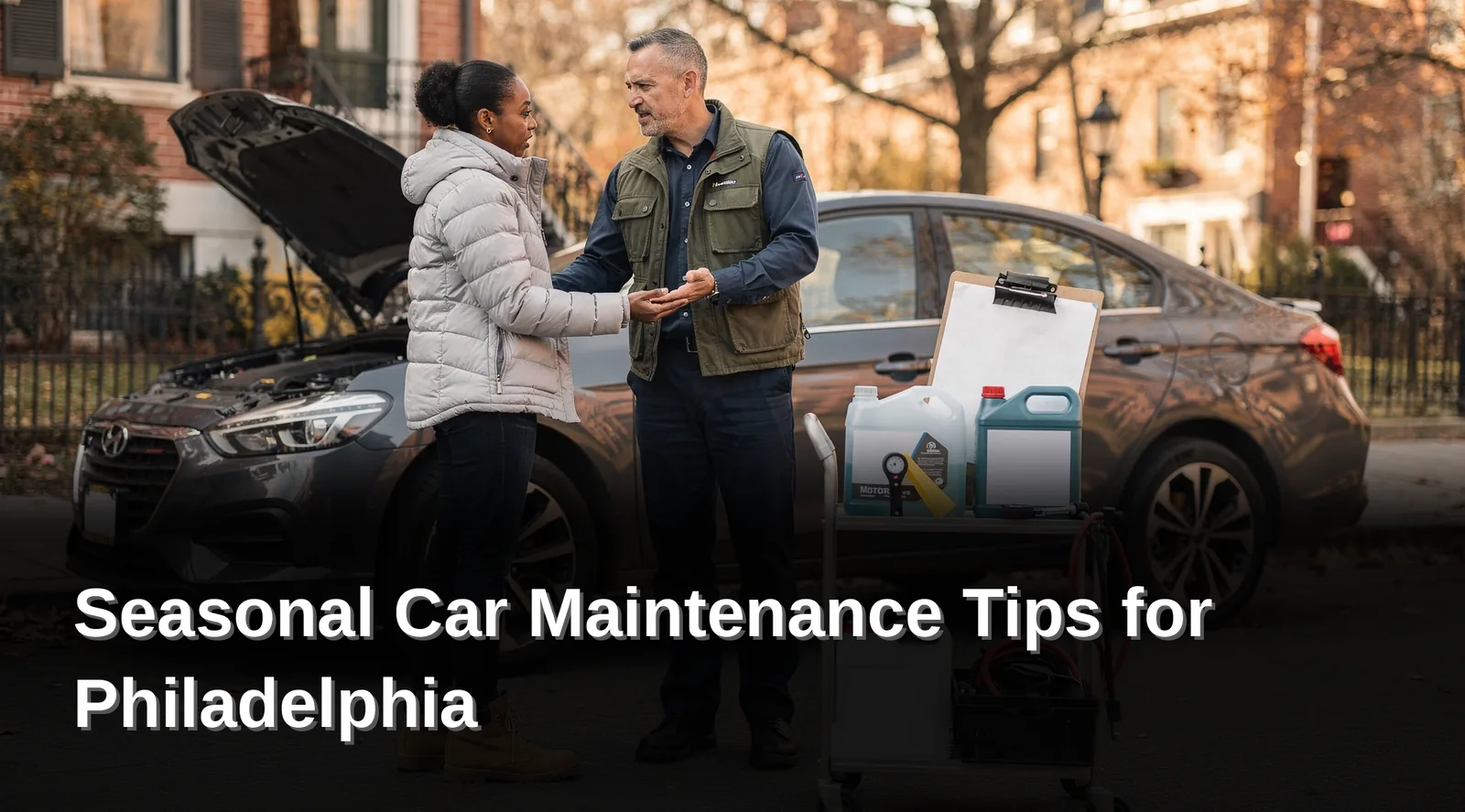
Philadelphia drivers face road salt, potholes, and sharp temperature swings that wear down brakes, suspension, and cooling systems faster than in milder climates. Auto Maintenance Tips for Philadelphia Drivers Seasonal maintenance means fluid checks, tire rotations, and inspections before winter freeze-thaw cycles hit. 8 Cylinders Auto Repair’s ASE-certified technicians provide detailed estimates and diagnostic accuracy, helping local drivers avoid costly major repairs later.
Key Takeaways
- Philadelphia’s road salt, potholes, and temperature swings accelerate wear on brakes, suspension, and cooling systems.
- Winter tires with specialized rubber compound maintain traction on icy Philadelphia roads during freeze-thaw cycles.
- Regular fluid checks, tire rotations, and seasonal inspections prevent costly repairs before winter arrives.
- Preventive maintenance before seasonal changes keeps your vehicle reliable through Philadelphia’s harsh weather conditions.
What Should You Prepare Before Starting?
Preparation starts with a clear picture of local conditions. Philadelphia drivers contend with road salt, pothole-scarred streets, and sharp temperature swings that wear down brakes, suspension, and cooling systems faster than milder climates allow. A plan designed for these stresses prevents small issues from becoming major repairs.
What records should a vehicle owner gather first?
Owners should collect maintenance history, warranty documents, and any recent inspection notes before scheduling service. Having this paperwork ready helps technicians diagnose issues accurately and avoid redundant testing.
Before heading to a service appointment, Philadelphia vehicle owners should:
- Review recent repair receipts for patterns in recurring problems.
- Check tire tread depth and brake pad thickness at home.
- Note any warning lights, noises, or handling changes.
- List winter driving habits, including salted-road exposure.
Where can Philadelphia drivers find reliable inspection service?
8cylindersautorepair operates in Philadelphia, PA, giving commuters a nearby option for seasonal checkups. Technicians perform thorough inspections on belts and related systems, reducing surprise estimates when problems turn out larger than expected.
How Do You Complete The Seasonal Steps?
Completing seasonal car maintenance tips for Philadelphia drivers requires a set order: tires first, belts second, exhaust system last. Skipping steps leaves gaps that winter weather and salt-covered roads expose fast. Follow this sequence before temperatures drop and snow begins to fall.
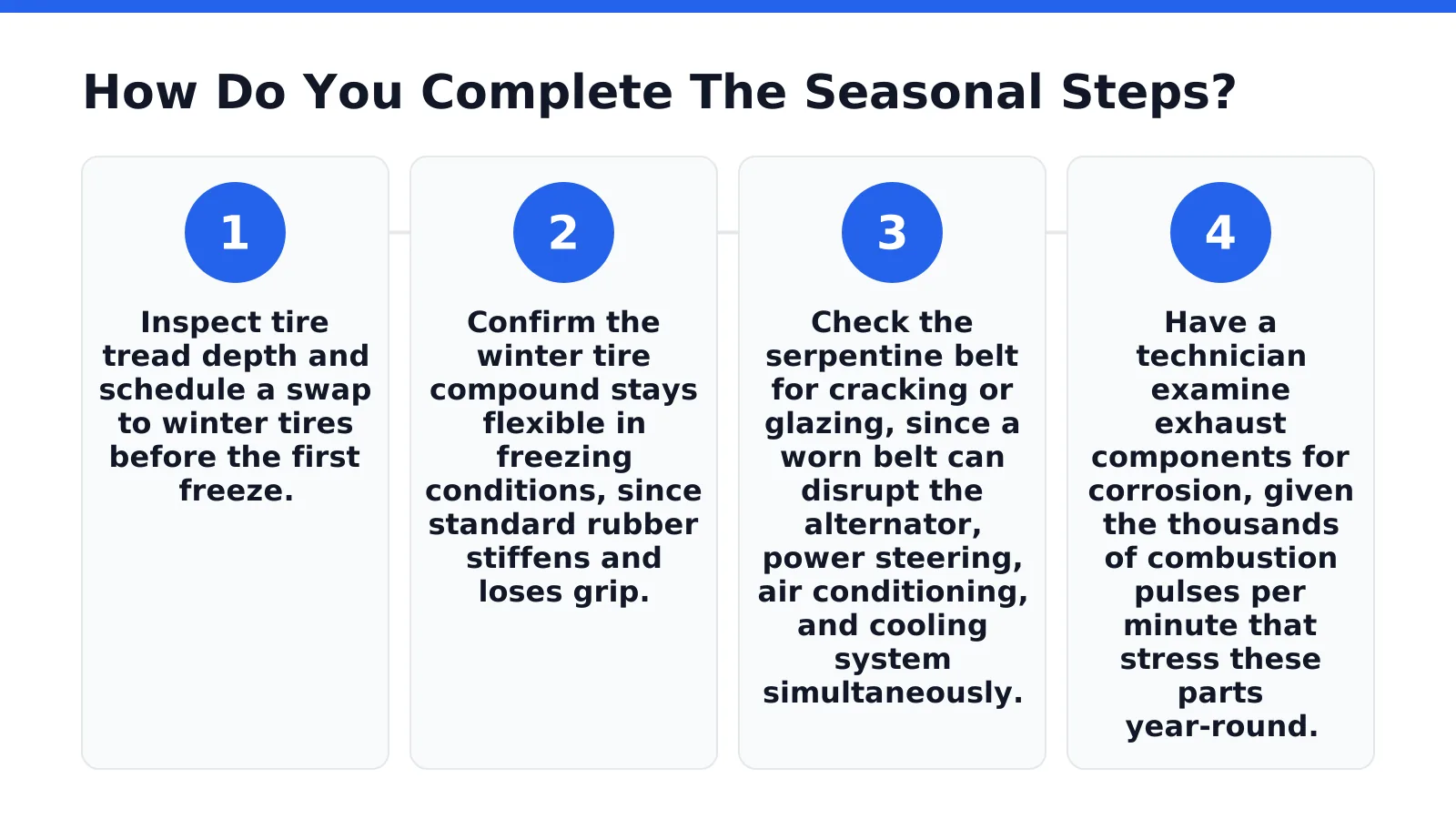
- Inspect tire tread depth and schedule a swap to winter tires before the first freeze.
- Confirm the winter tire compound stays flexible in freezing conditions, since standard rubber stiffens and loses grip.
- Check the serpentine belt for cracking or glazing, since a worn belt can disrupt the alternator, power steering, air conditioning, and cooling system simultaneously.
- Have a technician examine exhaust components for corrosion, given the thousands of combustion pulses per minute that stress these parts year-round.
Why Does Tire Timing Matter So Much?
Traction on icy Philadelphia streets depends entirely on tread compound and timing. Waiting until after the first snowfall means driving on tires that haven’t adjusted to cold-weather flex, raising skid risk.
Can A Damaged Muffler Affect Performance?
Yes. Modern mufflers rely on tuned internal chambers to cancel sound frequencies, so damage alters both noise levels and engine efficiency.
What Should You Watch For Afterward?
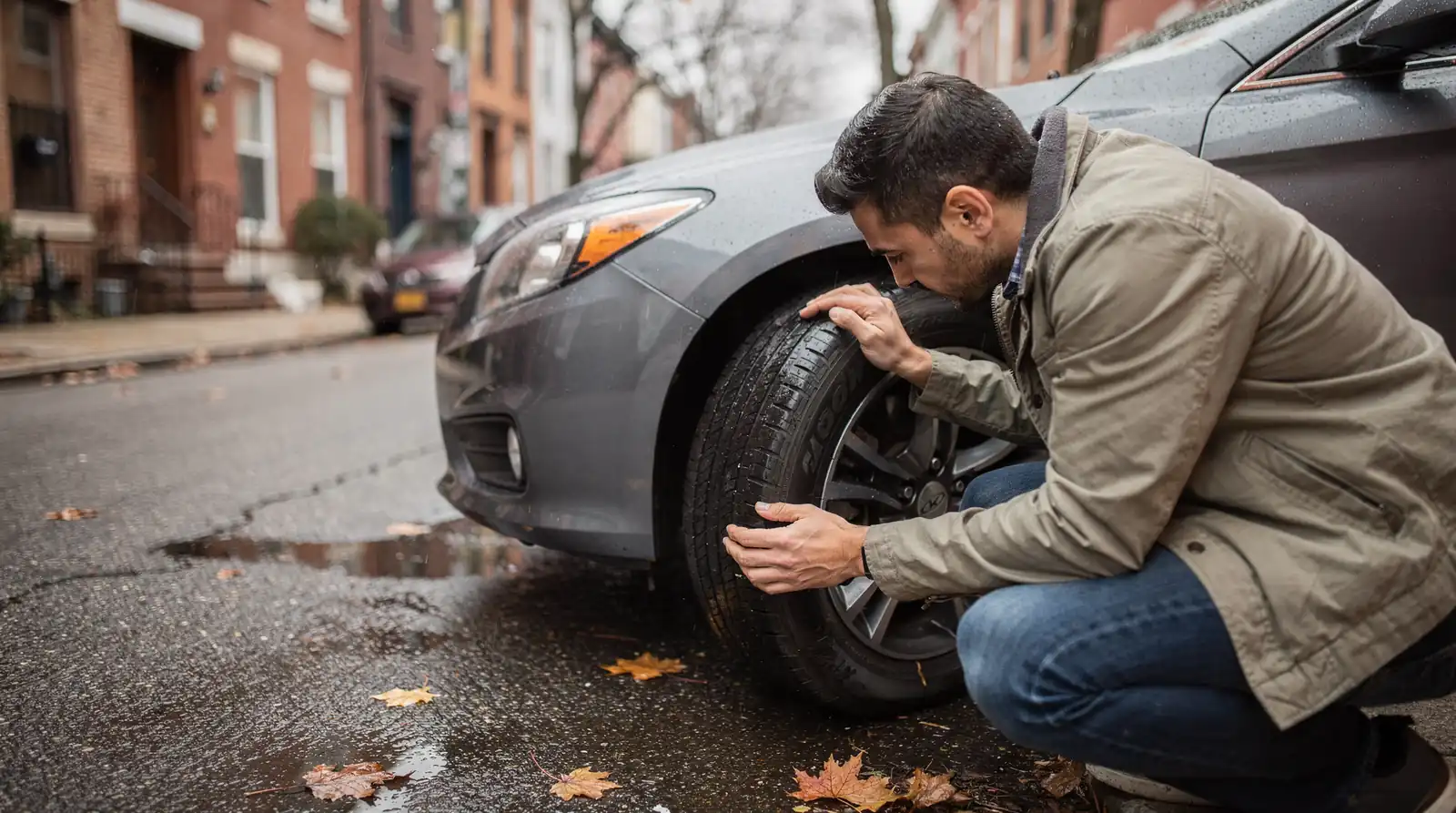
Warning lights and unusual noises deserve attention right after a seasonal visit. Philadelphia commuters should track performance for several days, since early signs reveal whether a repair solved the underlying issue. Specific knowledge matters here: specialized repair services often catch model-specific quirks a generic shop misses. Technicians servicing nearly every Ford model rely on modern diagnostic equipment and manufacturer-recommended procedures, a standard worth expecting after any seasonal car maintenance visit in Philadelphia.
Why does climate control fail after a repair?
Extreme weather strains climate control systems heavily. Failure often surfaces at the worst moment, mid-commute on a frigid Philadelphia morning. Watch for weak airflow or slow cabin warming.
- Dashboard warning lights reappearing
- Unusual belt noise or vibration
- Weak heating or AC output
Skipping follow-up checks removes a safeguard that extends vehicle lifespan significantly.
FAQ
What causes faster wear on Philadelphia vehicles?
Road salt, potholes, and sharp temperature swings accelerate wear on brakes, suspension, and cooling systems in Philadelphia. These conditions make seasonal fluid checks, tire rotations, and inspections essential before winter freeze-thaw cycles arrive.
Why should drivers switch to winter tires before the first snowfall?
Winter tires use a specialized rubber compound that stays flexible in freezing temperatures, unlike standard rubber, which stiffens and loses grip. Waiting until after the first snowfall increases skid risk on icy Philadelphia streets.
What happens if the serpentine belt fails?
A worn serpentine belt disrupts the alternator, power steering, air conditioning, and cooling system simultaneously. Technicians at 8 Cylinders Auto Repair check belts for cracking or glazing during seasonal inspections to prevent this.
Conclusion
In closing, seasonal car maintenance protects Philadelphia vehicles from the unique stresses of local roads and weather patterns. By following a structured inspection sequence, tires, belts, and exhaust systems, drivers prevent small issues from escalating into costly repairs. ASE-certified technicians provide the diagnostic accuracy and detailed estimates that build confidence in every service decision. Committing to these preventive steps before winter arrives keeps your vehicle reliable through Philadelphia’s harsh conditions and extends its operational lifespan significantly.