
Brake repair services in Philadelphia address noise, pulsation, and stopping-distance concerns affecting daily commutes. 8 Cylinders Auto Repair provides brake inspections, pad and rotor replacement, and fluid service for all makes and models, including Audi, BMW, Honda, and Toyota. Annual inspection of brake system parts remains essential for safe, reliable vehicle performance on Philadelphia roads.
Key Takeaways
- Professional brake inspections at 8cylindersautorepair protect your vehicle’s most critical safety system annually.
- We perform complete brake services, from pad replacements to full system overhauls for all vehicles.
- Squealing or grinding noises indicate your brakes need immediate professional service and inspection.
- 8cylindersautorepair recommends only necessary repairs, never overselling brake work to Philadelphia customers.
How Can Philadelphia Drivers Spot Early Brake Wear?
Squealing or grinding sounds during braking signal the earliest stage of pad wear and demand attention before damage spreads to rotors. Philadelphia motorists navigating pothole-heavy streets and stop-and-go traffic on routes like Broad Street face faster brake wear than drivers in less congested areas. A shop based in Philadelphia brings firsthand familiarity with these local driving conditions, understanding how city stops and winter salt accelerate component breakdown.
Reliable brake repair services in Philadelphia cover far more than one vehicle type. Technicians trained across all makes and models, including Audi, BMW, Honda, and Toyota, recognize how braking symptoms differ by manufacturer and design.
What noise means a brake job is overdue?
A high-pitched squeal usually means pad wear indicators have activated. A grinding sound signals metal-on-metal contact, meaning pads have worn through completely.
Drivers should watch for:
- Squealing noise during light braking
- Grinding noise under moderate or hard braking
- Noise that worsens with speed or distance driven
What Happens During A Professional Brake Inspection?
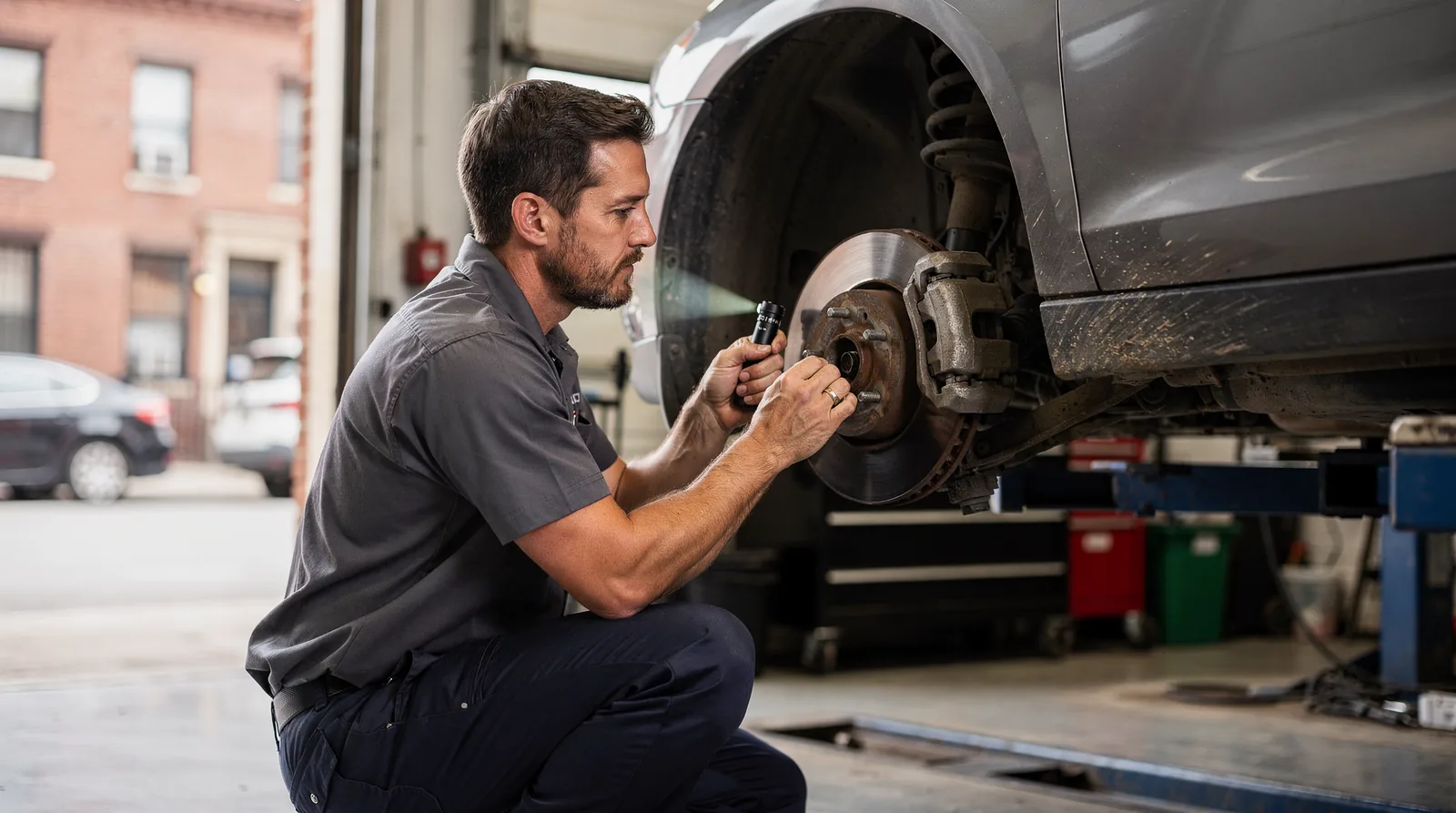
A professional brake inspection examines every major component of the braking system, not just the pads. Technicians rely on advanced diagnostic equipment to pinpoint problems accurately, catching issues that a visual check alone might miss. For Philadelphia drivers navigating pothole-riddled avenues and stop-and-go traffic on I-76, that level of scrutiny matters.
A complete inspection follows a clear sequence:
- Connect diagnostic equipment to assess braking performance and sensor data.
- Examine pads, rotors, calipers, and brake lines for wear or damage.
- Check fluid levels and condition throughout the system.
- Deliver honest recommendations based on findings, backed by dependable workmanship.
How Often Should Brakes Be Inspected?
Brake components should be checked by a professional at least once annually. Philadelphia’s seasonal road salt and frequent braking cycles accelerate wear, so skipping this yearly checkpoint risks unnoticed deterioration. Quality Brake Repair Services Philadelphia providers build this standard into routine maintenance visits, keeping surprises off the repair bill.
Vehicle owners who delay inspections often face bigger repair costs later. Small issues like thinning pads escalate into rotor damage or caliper failure when ignored.
What Should Drivers Do After Brake Repair Service?
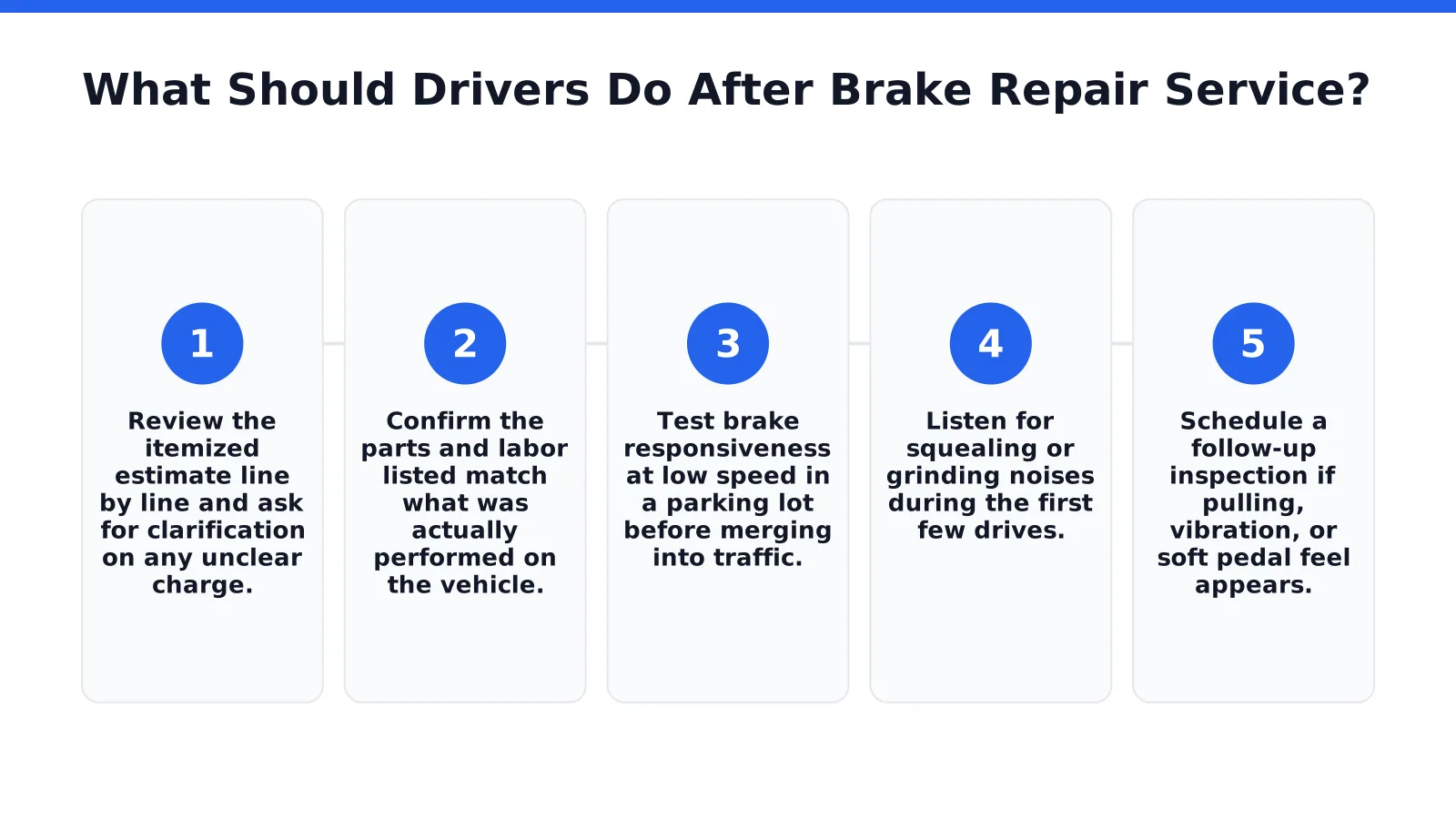
Completed brake work is designed to return Philadelphia drivers to the road safely and efficiently. A short checklist helps confirm the repair matches expectations before the invoice gets filed away.
- Review the itemized estimate line by line and ask for clarification on any unclear charge.
- Confirm the parts and labor listed match what was actually performed on the vehicle.
- Test brake responsiveness at low speed in a parking lot before merging into traffic.
- Listen for squealing or grinding noises during the first few drives.
- Schedule a follow-up inspection if pulling, vibration, or soft pedal feel appears.
How can drivers tell if a brake shop overcharged them?
Reputable Philadelphia shops avoid recommending repairs beyond what a vehicle genuinely needs. Comparing the written estimate against the final bill, and questioning any added service not discussed beforehand, protects against inflated charges.
FAQ
What noise indicates my brakes need repair?
A high-pitched squeal means pad wear indicators have activated. A grinding sound signals metal-on-metal contact from pads worn through completely. Both require immediate professional attention.
What does a professional brake inspection include?
Technicians connect diagnostic equipment, examine pads, rotors, calipers, and brake lines for wear or damage, check fluid levels, and deliver honest recommendations based on findings.
How often should Philadelphia drivers get brakes inspected?
Philadelphia’s seasonal road salt and frequent braking cycles accelerate wear, making this yearly checkpoint essential.
Conclusion
In closing, brake safety demands the same professional attention Philadelphia drivers give to every other critical vehicle system. The combination of annual inspections, prompt attention to warning signs, and honest repair recommendations protects both your safety and your wallet. 8 Cylinders Auto Repair stands ready to deliver the expertise and transparency your brakes deserve, keeping you confident on Philadelphia roads for years to come.