
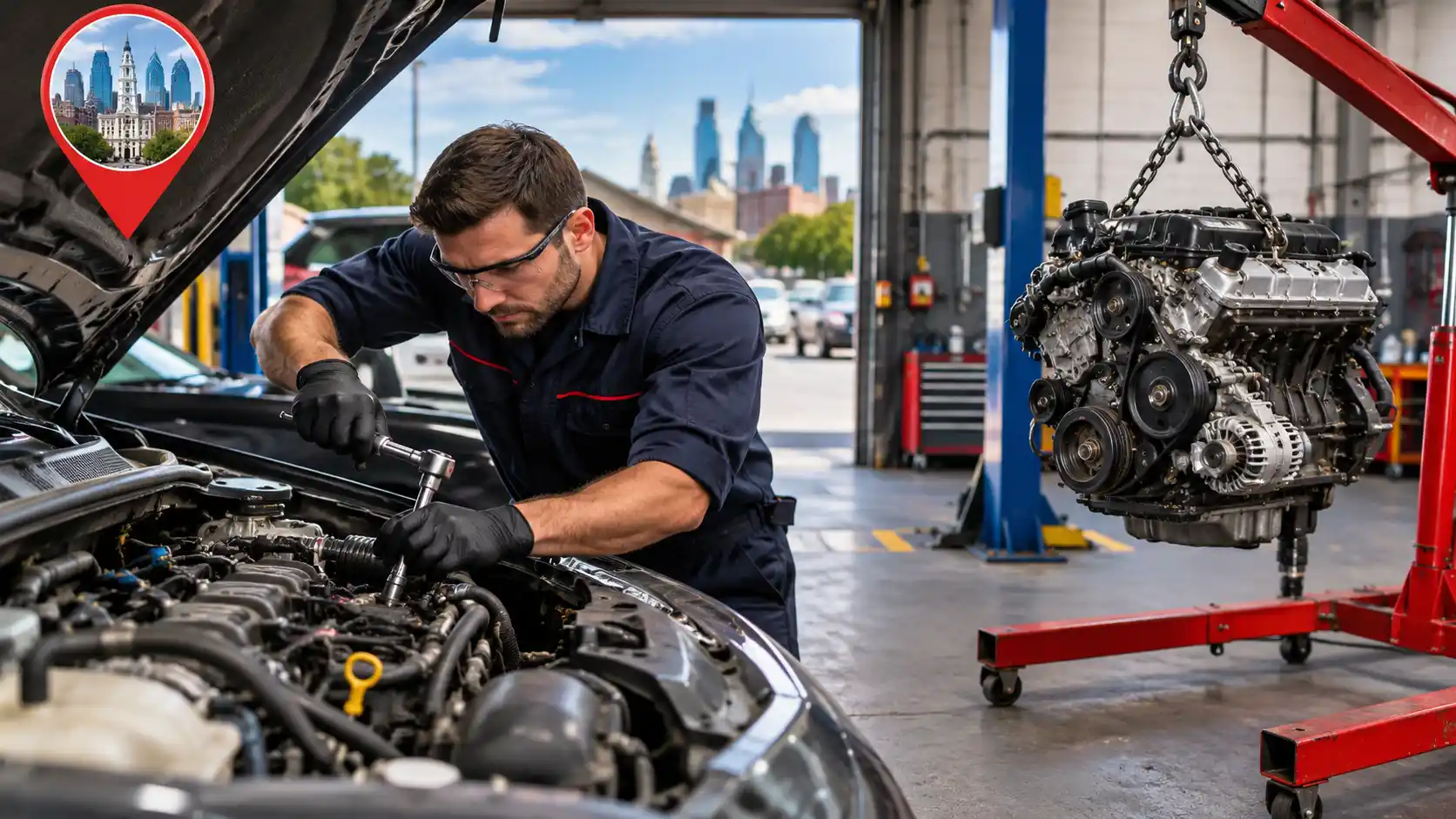
Engine repair vs replacement is a decision that can affect your budget, your vehicle’s reliability, and how long you can keep driving it. A damaged engine doesn’t automatically need to be replaced. Sometimes a failed ignition coil, cooling system component, or cylinder head gasket can be repaired without removing the entire engine.
Other situations are more serious. A seized engine, badly damaged crankshaft, cracked engine block, or extensive internal wear may make replacement more practical than repairing individual components.
The difficult part is knowing which situation applies to your vehicle.
Imagine your car begins shaking while idling, loses power, and triggers a check engine light. One repair shop recommends replacing the engine. Another suggests additional testing. The difference between those recommendations could involve thousands of dollars.
Before committing to an expensive repair, you need to understand what failed, whether the damage can be contained, and what each option will cost once labor and related repairs are included.
This guide explains how to compare engine repair vs replacement, how mechanics diagnose internal damage, when rebuilding makes sense, and how to decide whether the vehicle is worth keeping.
Table of Contents
- Engine Repair vs Replacement: The Short Answer
- Seven Checks Before Approving Major Engine Work
- What Engine Diagnostics Should Tell You
- When Repairing Your Engine Makes More Sense
- When Replacing the Engine Is the Better Option
- Engine Rebuilding, Used Engines, and Remanufactured Engines
- How Much Does Engine Repair vs Replacement Cost?
- Is Your Vehicle Worth Fixing?
- Three Situations That Change the Decision
- Questions to Ask Before Authorizing Engine Work
- Frequently Asked Questions About Engine Repair and Replacement
Engine Repair vs Replacement: The Short Answer
Engine repair is generally the better choice when the problem is limited to a repairable component and the engine remains mechanically sound. Engine replacement becomes more attractive when internal damage is extensive, rebuilding costs are high, or the remaining engine components cannot be trusted.
A proper diagnosis matters more than the mileage on the odometer.
A car with 180,000 miles and a defective ignition coil might need a straightforward repair. A vehicle with 45,000 miles that suffered severe oil starvation might need extensive internal work or a replacement engine.
Here is how the options compare.
| Factor | Engine Repair | Engine Replacement |
|---|---|---|
| What it involves | Fixing defective or damaged components | Removing the existing engine and installing another |
| Typical purpose | Correct a specific problem | Address extensive or uneconomical internal damage |
| Initial cost | Often lower for limited repairs | Usually higher, especially with new engines |
| Labor requirements | Depends on component accessibility | Involves major removal and installation work |
| Reliability | Depends on remaining engine condition | Depends on replacement engine quality and installation |
| Warranty | Varies by repair and shop | Varies by engine supplier and installation agreement |
| Best suited for | Isolated faults and repairable mechanical damage | Severe failure or extensive internal wear |
The comparison is not always straightforward. A major repair such as cylinder head work can require considerable labor. In some cases, an installed replacement engine may cost only moderately more than repairing the original.
That is why the first step in the engine repair vs replacement decision should always be an accurate diagnosis.
Seven Checks Before Approving Major Engine Work
A major engine estimate deserves more attention than simply comparing the final price.
These seven checks help reveal which option is actually worth considering.
1. Confirm What Has Failed
Ask the mechanic to identify the failed component or system.
An engine that won’t start may have a faulty starter, battery connection, or electrical problem. Rough running may be caused by ignition or fuel delivery faults.
The diagnosis should identify the failure, not simply describe the symptom.
2. Determine Whether the Damage Is Internal
Problems with spark plugs, injectors, sensors, and external cooling components are different from damaged pistons, bearings, or cylinder walls.
Internal damage often requires more labor and can affect components beyond the original failure.
3. Ask Whether the Engine Can Be Repaired Reliably
Some damage can be repaired, but that doesn’t automatically make repair the most economical decision.
For example, replacing one damaged bearing without addressing crankshaft wear or metal contamination may not resolve the underlying problem.
The mechanic should explain whether the proposed repair addresses the complete failure.
4. Compare Fully Installed Costs
A replacement engine’s purchase price is only part of the expense.
Installation, fluids, gaskets, supporting components, programming, and testing can affect the final invoice.
Compare complete repair estimates rather than parts prices.
5. Consider the Condition of the Rest of the Vehicle
A sound transmission, solid body, and well-maintained suspension make a major engine investment easier to justify.
A vehicle with transmission problems, significant corrosion, and numerous deferred repairs may not be worth another large expense.
6. Compare Warranty Protection
A used engine with limited parts coverage may carry more financial risk than a properly rebuilt or remanufactured engine with stronger warranty terms.
Ask specifically whether the warranty includes labor if the replacement engine fails.
7. Check Whether the Original Cause Has Been Corrected
If the previous engine overheated because the radiator failed, installing another engine without fixing the cooling system creates another risk.
Similarly, an oil supply problem must be investigated before a replacement engine is installed.
A good engine repair vs replacement decision addresses both the damaged engine and what caused the failure.
What Engine Diagnostics Should Tell You Before You Spend Money
A check engine light, knocking noise, or loss of power is evidence that something needs attention. None of these symptoms independently confirms that an engine is beyond repair.
Different tests answer different questions.
Computer Diagnostics Identify Possible System Faults
Modern vehicles store diagnostic trouble codes when their control systems detect certain abnormal conditions.
An engine light diagnostic inspection can help identify problems involving ignition, fuel delivery, emissions controls, and other monitored systems.
However, a trouble code is not a complete diagnosis.
For example, a cylinder misfire code identifies a combustion problem. It doesn’t establish whether the cause is a spark plug, ignition coil, injector, compression loss, or another issue.
A technician must investigate the underlying cause.
Compression Testing Evaluates Cylinder Sealing
Inside an engine, pistons compress the air and fuel mixture before combustion.
If a cylinder cannot build adequate pressure, the engine may misfire, lose power, or become difficult to start.
An engine compression test helps determine whether the cylinders are sealing properly.
Low compression can result from worn piston rings, damaged valves, incorrect valve timing, or a failed head gasket.
The readings must be interpreted against the engine manufacturer’s specifications and the conditions of the test.
One low cylinder doesn’t automatically mean the entire engine needs replacing.
Leak-Down Testing Helps Locate Internal Leakage
When compression readings suggest mechanical damage, an engine leak-down test can provide more information.
The technician introduces compressed air into a cylinder and measures how much escapes.
The location of escaping air can help identify the problem.
Air escaping through the intake may suggest an intake valve sealing issue. Leakage through the exhaust may indicate an exhaust valve problem. Air entering the crankcase may indicate piston ring or cylinder wear.
These findings help distinguish repairable cylinder head problems from more extensive engine wear.
Cooling System and Head Gasket Testing
An overheating vehicle may have an external coolant leak, a malfunctioning water pump, or internal engine damage.
A cooling system pressure test can help reveal leaks, but it cannot rule out every type of head gasket failure.
A head gasket chemical test may help detect combustion gases entering the cooling system.
Additional testing or disassembly may still be necessary if the results are inconclusive.
For drivers comparing engine repair vs replacement after overheating, these tests can prevent expensive decisions based on assumptions.
When Repairing Your Engine Makes More Sense
Many engine problems sound serious because they affect how the car runs. Fortunately, not every noticeable symptom comes from damaged internal components.
Ignition Problems Can Feel Like Engine Failure
A failing ignition system may cause rough idling, hesitation, poor acceleration, or repeated misfires.
If an ignition coil cannot deliver the required spark, the affected cylinder may fail to combust fuel correctly.
Replacing a defective ignition coil or performing necessary spark plug replacement can resolve certain misfires without major engine work.
A flashing check engine light, however, needs prompt attention. Continued driving with a severe misfire can damage the catalytic converter.
Fuel Delivery Problems Can Reduce Engine Performance
Faulty fuel injectors, fuel pressure problems, and related control issues can produce symptoms that resemble mechanical engine trouble.
A vehicle may hesitate, shake, stall, or struggle to accelerate.
If testing confirms a fuel delivery fault and the engine’s internal condition is sound, fuel injection repair may be sufficient.
Replacing the entire engine would not be an appropriate response to a repairable fuel system problem.
Cooling System Repairs May Prevent Engine Damage
Engine overheating is a warning that requires immediate attention, but overheating doesn’t automatically mean the engine is ruined.
A leaking radiator, damaged hose, failed water pump, or cooling fan problem can prevent the engine from maintaining a safe operating temperature.
If the driver shuts the engine off promptly and internal damage has not occurred, cooling system repair may restore normal operation.
The situation changes if the vehicle was driven while severely overheated.
Excessive heat can distort cylinder heads, damage gaskets, affect bearings, and create problems that require more extensive repairs.
A Failed Head Gasket Doesn’t Always Require a New Engine
The head gasket seals the connection between the engine block and cylinder head.
When it fails, coolant, oil, or combustion gases may move into areas where they don’t belong.
Depending on the failure, symptoms may include coolant loss, overheating, rough running, or persistent white exhaust smoke.
Professional head gasket repair can be reasonable when the cylinder head and engine block are serviceable and the lower engine remains healthy.
However, repairing the gasket alone will not solve cracked components, badly distorted sealing surfaces, or damage caused by prolonged overheating.
A mechanic may need to inspect the cylinder head and verify its condition before providing a reliable final estimate.
Timing System Problems Need Careful Evaluation
Some engines use timing belts, while others use timing chains to coordinate crankshaft and camshaft movement.
A worn or damaged timing component may create noise, running problems, or eventually cause the engine to stop.
On interference engines, a broken timing belt can allow pistons and valves to collide.
The resulting damage may require cylinder head repair, but the engine may still be recoverable.
A technician should evaluate the damage before deciding whether timing belt replacement and related repairs are enough.
Repair is usually the stronger option when the fault is clearly identified, the engine’s fundamental components are healthy, and the work can restore dependable operation at a reasonable cost.
When Replacing the Engine Is the Better Option
There are situations in which repairing one component does not adequately address the extent of the damage.
The question changes from “Can this part be fixed?” to “Will the remaining engine be reliable after the repair?”
Severe Bearing or Crankshaft Damage
Engine bearings allow major rotating components to move while maintaining a protective film of oil.
When lubrication fails, metal surfaces can contact one another and cause significant wear.
A deep knocking sound may indicate a connecting rod bearing problem, although other causes must be ruled out.
If the crankshaft is badly damaged or metal debris has circulated through the lubrication system, replacing only the worn bearing may not be a durable solution.
A complete rebuild or engine replacement may be more appropriate.
A Cracked Engine Block or Extensive Cylinder Damage
The engine block forms the structural foundation of the engine.
Cracks, severely damaged cylinder walls, or other substantial block defects can make repair difficult or uneconomical.
Some defects can be repaired by qualified machine shops, but not every block is a suitable candidate.
The repair price, structural condition, and availability of replacement engines determine which option makes sense.
Engine Seizure Following Oil Starvation
An engine may seize when moving components can no longer rotate normally.
Possible causes include severe overheating, oil starvation, or internal mechanical failure.
The damage can involve bearings, pistons, cylinder walls, and crankshaft components.
A seized engine is not automatically impossible to rebuild. However, extensive internal damage can make complete engine replacement a more practical choice.
Multiple Internal Problems at the Same Time
Consider an engine with excessive oil consumption, worn cylinders, low compression, and damaged bearings.
Repairing one problem may leave several others unresolved.
When multiple major components need work, the total cost of machining, parts, and labor may approach or exceed a suitable replacement engine.
At that point, engine repair vs replacement becomes a question of expected reliability as much as immediate cost.
Engine Rebuilding, Used Engines, and Remanufactured Engines
There is an important third option between ordinary engine repair and complete replacement.
Engine rebuilding involves disassembling the existing engine, inspecting its internal components, and repairing or replacing parts as required.
A rebuild may involve pistons, bearings, seals, cylinder machining, cylinder head work, or other operations depending on the engine’s condition.
It is not automatically cheaper or better than replacement.
When Does Rebuilding Make Sense?
A rebuild may be appropriate when the original engine block is sound, repair parts are available, and the cost of restoring the engine is competitive with replacement.
It can also be attractive when maintaining the original engine matters, such as with certain collectible or specialized vehicles.
However, unexpected damage discovered during disassembly can increase the total price.
Comparing Replacement Engine Types
| Engine option | Main advantage | Main consideration |
|---|---|---|
| Used engine | Often lower initial purchase cost | Unknown wear, history, and potentially limited warranty |
| Rebuilt engine | Repairs a specific engine using inspected and replaced components | Quality depends on inspection, machining, parts, and workmanship |
| Remanufactured engine | Reprocessed to a defined set of specifications | Cost and warranty terms vary by supplier |
| New engine | Unused engine supplied for the application | May be expensive or unavailable for older vehicles |
A remanufactured engine is not simply a used engine with a few new parts. A reputable remanufacturing process involves systematic inspection, machining or replacement of worn components, and verification against specifications.
Before purchasing a used engine, ask about its mileage documentation, source, part number, compatibility, inspection history, and warranty.
Our related article on used vs new engines explains the differences in more detail.
Also ask whether the quoted engine is a short block, long block, or more complete assembly. These terms describe different amounts of included equipment, and the scope can vary by supplier.
A lower engine price may not include the accessories and components needed to complete the installation.
How Much Does Engine Repair vs Replacement Cost?
The cost of engine repair vs replacement depends on the vehicle, the actual damage, parts availability, labor requirements, and the engine option selected.
A small external component repair may be relatively affordable. Internal engine work can become expensive because the technician must remove or disassemble major components.
According to a May 2026 ConsumerAffairs guide, engine replacement costs can fall in a broad range of approximately $2,000 to $10,000. That range is a general national reference, not a guaranteed price for a particular car or a Philadelphia repair quote.
For more background, see the ConsumerAffairs engine replacement cost guide.
Why Engine Repair Estimates Vary
The same symptom can result in very different repair costs.
An oil leak caused by an accessible gasket is different from a leak requiring engine removal.
Likewise, repairing a damaged cylinder head is different from rebuilding the lower engine after bearing failure.
Important pricing factors include the amount of disassembly required, the cost of replacement parts, machining needs, and how much additional damage is discovered.
Our article about factors affecting engine repair costs in Philadelphia provides additional context.
What Should Be Included in an Engine Replacement Estimate?
A written estimate should clarify:
- The engine’s purchase price and source
- Removal and installation labor
- Engine oil, coolant, filters, seals, and required gaskets
- Additional components that need replacement
- Programming or calibration, if required
- Diagnosis and repair of the original failure’s cause
- Testing after installation
- Warranty details, including labor coverage
- Applicable taxes, fees, and potential additional charges
A quote that includes the engine but excludes installation or related parts should not be compared directly with a complete installed price.
You can also review our engine replacement cost estimate guide when preparing to compare quotes.
An Illustrative Repair vs Replacement Calculation
Imagine a car owner receives the following estimates:
| Option | Hypothetical Cost |
|---|---|
| Repair existing engine | $3,200 |
| Install a used replacement engine | $4,600 |
| Install a remanufactured engine | $6,800 |
These figures are hypothetical and are not actual 8 Cylinders Auto Repair quotes or local market averages.
At first glance, repairing the engine saves $1,400 compared with installing the used engine.
But the price alone doesn’t determine the better decision.
If the repair addresses a clearly identified cylinder head problem and the lower engine is healthy, it may be reasonable.
If the engine has widespread internal wear and additional damage is likely, spending $3,200 on the original engine may carry greater financial risk.
Now consider the remanufactured option. It costs considerably more initially, but a clearly documented inspection process and stronger warranty may justify the difference for someone planning to keep the vehicle for years.
The decision depends on the quality and scope of the work, not simply which estimate is lowest.
Is Your Vehicle Worth Fixing?
Even when an engine can be repaired or replaced, another question remains.
Is investing that money in the vehicle a sensible financial decision?
A vehicle’s resale value matters, but it should not be the only consideration.
Compare Repair Cost Against the Cost of Replacing the Car
Suppose a car is worth approximately $5,000 in running condition and requires $4,000 in engine work.
At first, that repair may look difficult to justify.
However, buying another reliable vehicle may require significantly more money. It may also introduce financing costs, higher insurance expenses, and unknown maintenance history.
The correct comparison is between the realistic cost of repairing your existing car and the total cost and risk of obtaining alternative transportation.
A repair costing more than the vehicle’s market value isn’t automatically the wrong decision, but it deserves careful evaluation.
Consider Problems Beyond the Engine
A new engine will not repair a worn transmission, unsafe brakes, structural rust, or a failing suspension.
Before approving a major engine expense, ask for an assessment of the vehicle’s remaining mechanical condition.
For example, an older vehicle that also needs transmission replacement may be a less attractive candidate for expensive engine work.
The same reasoning applies if several major repairs are likely in the near future.
Mileage Doesn’t Tell the Whole Story
A well-maintained high-mileage vehicle may be a better repair candidate than a neglected car with fewer miles.
Maintenance history, accident damage, corrosion, fluid leaks, transmission performance, and the availability of parts all matter.
A replacement engine also doesn’t reset the mileage or wear of the rest of the vehicle.
When comparing engine repair vs replacement, judge the whole car rather than concentrating on the engine alone.
Three Situations That Change the Engine Repair vs Replacement Decision
Real automotive decisions rarely fit a simple rule.
The following hypothetical examples show why the correct answer changes depending on the diagnosis.
Scenario 1: A Car Shakes and the Check Engine Light Flashes
A driver notices rough idling, hesitation, and a flashing check engine light.
The initial concern is that the engine may be failing.
Testing identifies a defective ignition coil. Compression readings are within specifications, and no internal mechanical fault is found.
More sensible option: Repair the ignition system.
Replacing the engine would not address the problem in a reasonable or economical way.
The driver should avoid continued operation with a severe misfire and arrange prompt repairs.
For more information about identifying serious symptoms, see signs of a failing engine.
Scenario 2: A Vehicle Overheats and Begins Losing Coolant
A driver continues operating a car after the temperature warning appears.
The engine later misfires and loses coolant without an obvious external leak.
Testing suggests combustion gases may be entering the cooling system.
Further inspection is needed to determine whether the head gasket failed and whether the cylinder head or block has sustained damage.
More sensible option: Do not choose repair or replacement until the extent of the damage is confirmed.
If the head and block are serviceable, head gasket work may be reasonable.
If overheating caused extensive internal damage, replacement may offer a more dependable result.
This example illustrates why repairing the cooling system alone is not always enough after a severe overheating event.
Scenario 3: An Engine Develops a Deep Knock After Oil Loss
A vehicle has been driven with insufficient oil and develops a heavy knocking sound.
Inspection reveals significant bearing damage, crankshaft wear, and contamination of the lubrication system.
Repairing one bearing would leave other damaged components unaddressed.
More sensible option: Obtain estimates for a complete rebuild and a suitable replacement engine.
The final decision should reflect the full damage assessment, engine availability, warranty, and vehicle condition.
A partial repair may look cheaper but could leave the owner facing another major failure.
The three scenarios show why symptoms alone cannot answer the engine repair vs replacement question. The decision should follow the evidence.
Questions to Ask Before Authorizing Engine Work
A major repair should begin with a clear explanation of the problem and a written estimate.
The Federal Trade Commission recommends getting a written estimate for repairs and considering a second opinion when work is expensive or complicated.
Its Auto Repair Basics guide is a useful resource for understanding repair charges, parts, estimates, and warranties.
Before approving engine work, ask the repair shop:
- What specifically failed, and what test confirmed it?
- Is the damage limited to one component or present throughout the engine?
- Can the existing engine be repaired reliably?
- What could increase the quoted price after disassembly?
- If replacement is recommended, is the engine used, rebuilt, remanufactured, or new?
- What components are included in the replacement assembly?
- Does the price cover installation, fluids, programming, and testing?
- What caused the original failure, and how will that problem be corrected?
- What warranty applies to the parts and labor?
- What happens if the repaired or replacement engine develops another problem?
Pay Attention to Warranty Exclusions
An engine warranty may cover the engine assembly but exclude certain accessories, labor, towing, or damage caused by external system failures.
Some warranties also require specific maintenance records or procedures.
Read the written terms before approving the work.
Consider a Second Opinion for Major Repairs
A second opinion is especially reasonable when the diagnosis is uncertain or the estimate is a significant portion of the vehicle’s value.
A different technician may recommend additional testing or identify a repair alternative.
However, the second opinion should be evidence-based. A lower estimate is not necessarily better if it excludes necessary work.
For an explanation of the diagnostic process, see what happens during professional vehicle diagnostics.
Preventing the Same Problem After Repair or Replacement
Once the engine work is complete, follow the maintenance instructions supplied for the vehicle and any replacement engine.
Use the manufacturer-specified engine oil and change it according to the applicable maintenance schedule.
Check oil and coolant levels as recommended, investigate unexplained fluid loss, and address overheating immediately.
Our guide on checking your engine oil level explains how to monitor an important part of engine health.
Routine oil change service and attention to warning signs can help reduce preventable lubrication problems.
Maintenance cannot eliminate every mechanical failure, but it can help protect the money invested in repairing or replacing an engine.
Frequently Asked Questions About Engine Repair vs Replacement
Is it cheaper to repair an engine or replace it?
Repairing an isolated problem is generally cheaper than replacing the engine. However, extensive internal repairs involving multiple components, machining, and substantial labor may approach or exceed replacement costs. Compare complete written estimates before deciding.
Is it better to rebuild an engine or replace it?
Rebuilding may make sense if the engine block is serviceable and the necessary work can be completed economically. Replacement may be more practical when damage is extensive or a suitable engine with clear warranty coverage is available. Neither option is universally better.
Can an engine with low compression be repaired?
Yes, depending on the cause. Low compression may result from damaged valves, worn piston rings, head gasket failure, or other mechanical problems. Compression and leak-down tests help determine what repairs may be required.
Does a blown head gasket mean I need a new engine?
Not necessarily. A head gasket can often be replaced when the cylinder head, block, and remaining internal components are serviceable. Severe overheating, cracks, or extensive internal damage can change the recommendation.
Is a used replacement engine reliable?
A used engine can provide dependable service, but its condition depends on previous maintenance, mileage, storage, damage history, and compatibility. Ask for documented information and review the warranty before purchasing.
How long does an engine replacement take?
The timeline depends on the vehicle’s design, engine availability, required supporting repairs, and whether programming or additional testing is needed. A shop should provide an estimated completion schedule after evaluating the vehicle and confirming the replacement engine.
Should I replace my engine if my car has high mileage?
Mileage alone is not a reason to replace an engine. Consider the diagnosis, maintenance history, vehicle condition, replacement cost, and how long you intend to keep the car.
Can I drive with a knocking or overheating engine?
A new, heavy metallic knock or a serious overheating warning can indicate a problem that may worsen with continued operation. Pull over safely, shut off the engine, and arrange professional assistance. A red oil pressure warning also calls for stopping the engine as soon as it is safe to do so.
Can engine replacement fix every performance problem?
No. A replacement engine will not automatically resolve problems involving the transmission, electrical system, fuel delivery components, or other vehicle systems. Correct diagnosis and post-installation testing remain essential.
How do I decide between engine repair vs replacement?
Start with a confirmed diagnosis, then compare the complete repair and replacement estimates, expected reliability, warranty coverage, and the condition of the vehicle. If the evidence does not clearly support a major replacement, request further testing or a second opinion before approving the work.
Making the Right Engine Decision in Philadelphia
Choosing between engine repair vs replacement should never depend on a single warning light, a guess about the mileage, or the lowest initial quote.
A repairable component fault may allow the original engine to keep working reliably. Serious internal damage may make a rebuild or replacement the more reasonable investment.
At 8 Cylinders Auto Repair, drivers in Philadelphia can explore professional engine repair services and engine replacement options based on their vehicle’s mechanical condition.
If your car is making unusual noises, losing power, overheating, or showing signs of engine trouble, the first step is to determine the cause.
Contact 8 Cylinders Auto Repair at (267) 667-1766 or book an automotive service appointment to discuss the problem and arrange an evaluation.
Shop Location: 3311 N 13th St, Philadelphia, PA 19140.
A clear diagnosis and a realistic comparison of your options can help you avoid unnecessary work and make a better decision for your vehicle.